The Greatest Literary Works

literary works documentation. essay on literature. student paper. etc

Bad Credit Loans & Credit Cards

Written by eastern writer on Sunday, April 06, 2008

Did you have any bad credit loans experiences which had lead you fall in a serious financial problem? Don't worry, you are not alone. Bad credit is also a reality for millions of Americans, making it difficult for these consumers to build the future they envision for themselves and their families. Fortunately, there are lenders who are willing to give those with bad credit credit card a second chance.

BadCreditOffers.com content with comprehensive information that you need to find the best credit that fit to your financial needs. They work directly with the credit issuer to provide direct links to the customer. Now visit BadCreditOffer.com and compare credit card, bad credit loans, and any other offers which you are looking for now. Then, after choosing the offer you can apply online instantly.

Read More......

Habiburrahman El Shirazy: No intentions to counter 'Satanic Verses'

Written by eastern writer on Sunday, April 06, 2008

Islam is an easy target for misrepresentation. It has been misunderstood and misused for centuries by its ignorant followers as well as its "enemies".

It is no surprise then that questions about the nature of the religion have been reiterated over the past three decades.

Does the faith recognize human rights? Is it compatible with democracy? Does it respect women? Is it tolerant? Can it cope with modernity and adopt its modern institutions? A bulk of scientific, philosophical articles have been written to answer these indicting questions, but the prejudices against the faith persist.

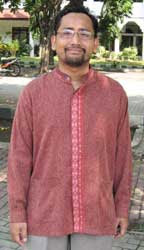
It is in such a frustrating situation that Muslim author Habiburrahman El Shirazy writes his novels and now plans to translate his most popular piece, Ayat-Ayat Cinta (Verses of Love), into English.

The movie based on the novel, which bears the same title, has proved to be wildly popular -- making schoolgirls and even the President shed tears.

"I just want to show the beauty of Islam that I feel and comprehend. Islam encourages its adherents to do good unto others and orders them to develop and respect the truth," the 32-year-old told The Jakarta Post in a email interview.

Graduating from Cairo's Al-Azhar University, the oldest and the most prestigious university in the Islamic world, Habiburrahman is among the few Indonesian Muslim writers who is well-versed in traditional Islamic studies such as the hadith, fiqh (Islamic jurisprudence) and Koranic exegesis. He was also brought up in a pesantren (Islamic boarding school) culture in Demak, Central Java.

His past distinguishes him from other Muslim writers, especially those from local state universities -- like the University of Indonesia, Gadjah Mada University, Padjajaran University and the Bandung Technology Institute -- who were mostly brought up in secular schools and who learned about Islam from translated books and by participating in the tarbiyah movement, the genesis of the Justice Prosperous Party (PKS).

Kang Abik, as his friends call him, said his novels do have a purpose -- the propagation of Islam.

To some readers, his works might sound irritatingly preachy as they were written with the conviction that "one of the ways to serve God is to use art as a medium to promote virtue".

"Art in Islam is considered to be in accordance with human nature, or fitrah. Islam recognizes that human beings need beauty, or arts. As serving God is the ultimate purpose of human life, everything (including making art) is a form of ibadah (worship) if it is aimed to serve God," he said.

But is not art identical with the freedom of expression?

"Every human being has desire. There is always this desire that tells a person to do evil. This desire has often turned art into a medium of gratification and freedom of expression is often used as an excuse. It contradicts the true nature of art, which is the beauty that enlightens people," he said.

Art and religion have long been part of Abik's life.

"It all started when I participated in a poetry reading competition in elementary school and won it. I read a poem by Chairil Anwar entitled 'Pangeran Diponegoro' (Prince Diponegoro). I was so happy because they gave me books as the prize. Since then, I have continued to enjoy literature. It all started with that poem," he said.

He said he started reading novels when he was in elementary school.

"There were several novels about the national struggle for independence in the school's library. There was a movie titled Serangan Fajar. I think that's the reason why I loved reading novels with a national theme," he said.

Before leaving for Egypt to study at Al-Azhar, he had won many art competitions. He had also written and directed a theatrical poem entitled Dzikir Dajjal (The Remembrance of the Anti-Christ) during high school.

In Ayat-Ayat Cinta, which is based on his contemplations of one the verses in the Koran, Kang Abik tries to present the "correct" Islam. One of the things that he tries to highlight is the relationship between Muslims and non-Muslims, especially the ahlul kitab, or "people of the Book".

"The most important thing in becoming a Muslim is contemplating the Koran consistently and responsibly. I believe if people understand the Koran correctly, they can be as mature as Fachri (the protagonist in the novel) when he interacts with Maria, who is a Coptic Christian," he said.

His novel goes further than telling Muslims to respect their Christian neighbors and guests. There are two sensitive issues, he said, that mainstream Muslims in Indonesia have missed or intentionally overlooked in the novel and the movie.

Kang Abik believes that interfaith marriage -- as conducted by Fachri and Maria -- is allowed in Islam, though with "several important conditions".

"The ground is clear as stated by sura Al-Maidah verse 5," adding that he was "following the opinion of the majority of the ulema".

The other issue concerns the controversy of polygamy. While a number of Muslim preachers promote polygamy, Kang Abik believes that "Islam demands justice, including in marriage".

"I believe that monogamy is more just than polygamy."

The character Fachri is loved by four women and marries two of them, but the novel highlights Fachri's natural inclination to be monogamous and -- as clearly shown in the movie -- depicts the psychological effects of a polygamous marriage.

"Polygamy is commanded by God as a solution, not a purpose. In the words of the majority of the ulema, polygamy is arukhsah (relief or dispensation), which should be carried out in a condition of emergency. We have to see this matter correctly. Sharia never intended to abuse people," he said.

Amid his activities as a lecturer and manager of his pesantren, Basmala Indonesia, and traveling from one city to another to talk about Islam, Kang Abik still proves himself to be a prolific writer.

Besides Ayat-Ayat Cinta, his other novels include Diatas Sajadah Cinta (On the Carpet of Love), Ketika Cinta Berbuah Surga (When Love Bears Heaven), Pudarnya Pesona Cleopatra (The Fading Charm of Cleopatra), Ketika Cinta Bertasbih (When Love Praises God, two volumes) and Dalam Mihrab Cinta (In the Pulpit of Love). He is now finishing Langit Makkah Berwarna Merah (the Red Sky in Mecca), Bidadari Bermata Bening (The Angel with Bright Eyes) and Bulan Madu di Yerussalem (Honeymoon in Jerusalem).

He reiterated that he writes his novels to promote kindness, not to counter other novels, including the famous work by Salman Rushdie, The Satanic Verses, which is considered blasphemous by the majority of Muslims.

"Ayat-Ayat Cinta will be translated into English, it is not aimed at countering any novel."

Source: The Jakarta Post

Read More......

Charlton Heston has passed away

Written by eastern writer on Sunday, April 06, 2008

Legendary actor Charlton Heston has passed away. He died today at his home in Beverly Hills. He was 83.

Mr. Heston starred in over 100 movies and became an icon based on more than just one film. His most notable roles were Moses in The Ten Commandments, astronaut George Taylor in Planet of the Apes, Detective Thorn in Soylent Green and Charles Neville in The Omega Man (yes, the same Neville as the one in I Am Legend).


Here is the official statement released by his family earlier today:

"To his loving friends, colleagues and fans, we appreciate your heartfelt prayers and support. Charlton Heston was seen by the world as larger than life. He was known for his chiseled jaw, broad shoulders and resonating voice, and, of course, for the roles he played. Indeed, he committed himself to every role with passion, and pursued every cause with unmatched enthusiasm and integrity."

"We knew him as an adoring husband, a kind and devoted father, and a gentle grandfather, with an infectious sense of humor. He served these far greater roles with tremendous faith, courage and dignity. He loved deeply, and he was deeply loved."

"No one could ask for a fuller life than his. No man could have given more to his family, to his profession, and to his country. In his own words, 'I have lived such a wonderful life! I've lived enough for two people.' A private memorial service will be held. The family has requested that, in lieu of flowers, donations be made to the Motion Picture and Television Fund:"

MPTF
22212 Ventura Boulevard, Suite 300
Woodland Hills, CA 91364
www.mptvfund.org

Website: http://www.mptvfund.org

Read More......

Breaking a writing block

Written by eastern writer on Sunday, April 06, 2008

All writers experience the occasional writing block.

Every few months I go through a period of time when I feel nauseous (that is, physically ill) whenever I sit down to write. It's as if my cobbler's elves have gone on strike and put up a "Gone fishing" sign. Years ago, I took this response as a sign that I should give up writing, and do something which made more sense. I agonized, wondering what the heck was wrong with me. Stupidly, I also binned whatever I was working on when the block hit. You should NEVER do this. Heaven knows how many manuscripts I binned when I wasn't thinking straight.

It took me a long while to realize that you can't bully creativity. You can coax it, but you can't flog it into action.

All creative people need to have regular periods where they relax and take a break. I watch a movie or three, and go window shopping. I read a lot. If I have to write for a deadline, I write in longhand, or on my Palm handheld, forcing myself to write a word at a time, because I know it has to get done.

I know now, that if I leave myself alone, I usually snap out of the block within a few days or a week.

There's a danger to a block like this. Because you're depressed, you may think that whatever you were working when the block hit was the trigger for the block, and decide to scrap the project.

**** HERE'S A TIP: NEVER, EVER DELETE YOUR WORK WHEN YOU'RE DEPRESSED ***

Don’t delete anything. After you get over the block, and are writing with enjoyment again, you can decide whether or not to scrap a project. Don’t make decisions like this when you're in the middle of a block.


This article is originally taken from http://copywriter.typepad.com.
Read also "Memulai dan Mengatasi writer's Block" a brief explanation about Writer's Block by Golagong.

Read More......

Postfeminism vs. the Third Wave

Written by eastern writer on Friday, April 04, 2008

In reading the essays on postfeminism in this section of EBR, I'm struck by the imprecision of the term. Some of the essays - like Stobb's - seem not to be discussing postfeminism per se, but just younger feminist negotiations with the conditions of life in the early 20th century. Others, like Guertin, use the term postfeminism but without a particular sense of its significance; this piece seems more to be discussing feminism in general, or perhaps third wave feminism - I find the discussion of cyberfeminism fascinating, but I don't buy that it's equivalent to postfeminism. Helford, Yaszek, and Mazza seem to be engaging with the idea of postfeminism in ways that I find most interesting and useful; they're identifying something other than third wave feminism, and they're considering the significance of the "post" rhetoric as it applies to feminism in an era of backlash.

The term "postfeminism" always makes me wary - it's a suspect term, a catchphrase from the early '90s that was used to suggest that we no longer need feminism, that we're past it. I don't hear it that much anymore, but when I do, it's often problematically used in a way that suggests it's synonymous with third wave feminism.

Now, speaking of imprecise and suspect terms, third wave feminism is right there with them - it's a highly contested term that loosely defines a generational and political cohort born after the heyday of the second wave women's movement. Although I've edited a collection of essays that both embraces and interrogates the term,notenotenote
Catching a Wave: Reclaiming Feminism for the 21st Century (Northeastern University Press, 2003)note1note others - like Bitch publisher Lisa Jervis - have argued that it's time to get rid of it altogether.

The controversies surrounding the use of the term "third wave feminism," however, are different from those surrounding "postfeminism." When feminists debate the third wave, generally they're trying to determine if there's enough of a generational divide between older and younger feminists to warrant a whole new label. The question seems to be, have we moved far enough from the social issues that propelled the women's movement in the 1960s and '70s to be able to suggest that there's a new wave? The rhetoric surrounding postfeminism, by contrast, tends, as Lisa Yaszek notes, "to describe the contemporary moment as one in which the goals of feminism have been achieved" and "to invoke a `blame-the-victim' mentality." Often arguments made from a postfeminist perspective rely on what Elyce Helford identifies as "the belief that personal choices and `bootstrap' efforts can bring a woman (and hence all women) empowerment and equality." While the third wave says, "We've got a hell of a lot of work to do!" postfeminism says, "Go buy some Manolo Blahniks and stop your whining."

Postfeminism relies on competitive individualism and eschews collective action; it obscures or makes invisible the many ways in which women are often fearful, subjected to rape and other kinds of violence, and politically and economically underprivileged. The third wave, however - in texts from Third Wave Agenda to Manifesta to Colonize This! - grapples with women's intersectional identities and demands an end to all the forms of oppression that keep women from achieving their full humanity.

Postfeminism and the third wave, then, are entirely different entities. Rebecca Walker's 1992 essay, "Becoming the Third Wave," articulates these differences powerfully; the essay documents the virulent and persistent sexism of the early 1990s and calls young feminists to rally to the cause, and the final paragraph of the essay consists of this declaration:

I am not a postfeminism feminist. I am the Third Wave.

Reading that always makes me want to make a fist and say, "Hell, yeah."

So, thirteen years after Walker's declaration, are we not finally past postfeminism?

:: this article written by Alison Piepmeier, originally published at www.electronicbookreview.com

Read More......

Meeting with NH Dini

Written by eastern writer on Friday, April 04, 2008

Nurhayati Sri Hardini Siti Nukatin also known as NH Dini was born in Semarang, Central Java, on February 29, 1936. Dini is one of Indonesian Feminist Writer who have started writing her literary works (novel and short story) since the 1950-60s decade when she was sixteen years old. And she amazingly keep writing her new novel up to now, after releasing "La Grande Borne" (2007) she recently released a new novel "Argenteuil" (March 2008). At least more than 20s books has been wrote by Dini. (Read more about NH Dini at Indonesian Wikipedia)

Image: NH Dini celebrate 68 birthday in Bentara Budaya Yogyakarta. [image taken from suaramerdeka.com]


I find any information related to NH Dini on the net. A blogger told on her blog that she has a simple ambition in his life. What's that, meeting with NH Dini. Wouw... sound great!


Aku punya satu cita-cita sederhana. Bertemu NH Dini, salah satu penulis buku yang aku kagumi.

Sudah beberapa tahun ini, terlebih sejak aku membaca Namaku Hiroko, Pada Sebuah Kapal dan Dari Parangakik ke Kampuchea, aku terobsesi ingin bertemu beliau. Mungkin sama sepertinya keinginan Happy Salma bertemu Pramoedya Ananta Toer. Bedanya, cita-cita Happy sudah tercapai, cita-citaku belum.

Source: http://shirleythe_24may.blogs.friendster.com


"Speaking of love, I had the opportunity to be introduced recently to one of your famous literary writers, by the name of NH Dini. I am not a literary person, and I haven't read any of her work (I used to read books by Hamka when I was a kid). But, she is one of those who exude a certain aura of love and compassion, no doubt gained from her life experience of 70 years, and all the people and events that contribute to it. And when she smiled at me, I felt so accepted and so understood. I love her, that lady, and I wish her blessings and joy the rest of her wonderful life."

Source: http://www.opensubscriber.com/message/zamanku@yahoogroups.com/8034191.html


More links related to NH Dini on the net:
- Buku NH Dini Cermin Batin Perempuan
- Biography of NH Dini at Wikipedia
- Brisbane with NH Dini
- Feminisme Eksistensialis, Sebuah Tinjauan dan Refleksi
- Biography of NH Dini at Tokoh Indonesia

Read More......

Pena Kencana Award: Full of Controversy

Written by eastern writer on Thursday, April 03, 2008

Faisal Kamandobat, one of Pena Kencana Award nominators, recently posted "an open letter" to the Pena Kencana commitee. Faisal refused his nominations since the winners will be decided by "SMS polling". The best appreciation for any literary works, based on Faisal, is by literary critics not polling by SMS. Here is the "Open Letter" posted by Faisal Kamandobat to the Pena Kencana commitee.

Pena Kencana

Di Tempat

Dengan tanpa mengurangi rasa hormat saya kepada pihak penyelenggara Pena Kencana Award, dan penghargaan kepada dewan juri yang telah memilih puisi saya ke dalam daftar 100 Puisi Terbaik Indonesia 2007, saya menyatakan mundur dari penghargaan Pena Kencana, dengan alasan sebagai berikut:

Puisi-puisi saya adalah usaha mengeksplorasi proposisi logis bahasa untuk tujuan estetika, dan oleh karena itu tidak bisa dikompensasi dengan sebuah peghargaan yang tidak berkaitan dengan hal itu, pula dengan alasan estetik lain yang dapat didengar dan dipertanggung-jawabkan di hadapan publik sastra.

Bagi saya, penghargaan yang paling layak dan terhormat terhadap karya sastra adalah dengan kritik sastra dan bukan dengan polling sms yang tidak didukung argumentasi literer yang memadai.

Usaha ekonomisasi sastra secara berlebihan akan menimbulkan dampak luas terhadap khazanah sastra kita, yaitu nilai ekonomi akan lebih menentukan kualitas sebuah karya sastra dibanding nilai estetik, ilmiah dan humanik, terlebih melihat tradisi tersebut belum sunguh-sungguh mapan dalam khazanah sastra kita.

Terdapat beberapa penyair selain saya yang lebih layak mendapatkan penghargaan ini, dengan menimbang intensitas, produktivitas, dan capaian estetiknya, di antaranya Raudal Tanjung Banua yang tekun mengekplorasi nuansa Melayu klasik sehingga tetap aktual dalam khazanah puisi Indonesia kontemporer, Riki Dhamparan Putra yang berusaha mengolah mistisisme dengan caranya sendiri dalam puisi-puisinya, dan I.G. Samargantang yang sangat kreatif mengekplorasi puisi magis Bali dalam karya-karyanya, serta banyak penyair lain yang penuh bakat dan dedikasi.

Demikian surat pengunduran diri ini saya buat, semoga dapat dimengerti oleh pihak Pena Kencana khususnya serta masyarakat sastra Indonesia pada umumnya. Adapun honor puisi saya berjudul Aku Mencintai Kalian sebesar Rp. 750.000,00 akan saya kembalikan ke alamat Pena Kencana lewat kantor pos.

Hormat saya,

Faisal Kamandobat

Read More......

Quote on Art and Literature

    "There is only one school of literature - that of talent."
~ Vladimir Nabokov (1899 - 1977)


Want to subscribe?

Subscribe in a reader Or, subscribe via email:
Enter your email here:

Top Blogs Top Arts blogs

Google