The Greatest Literary Works

literary works documentation. essay on literature. student paper. etc

Ulysses on Top Among 100 Best Novels

Written by eastern writer on Friday, April 08, 2011

Ulysses," that sprawling, difficult, but uniquely original masterpiece by James Joyce, has been voted the finest English-language novel published this century by a jury of scholars and writers.

The book -- in which an immensely long account of a single day in the lives of a group of Dubliners becomes a metaphor for the human condition and the author experiments with language almost to the point of unintelligibility -- heads the list of 100 novels drawn up by the editorial board of Modern Library, which has been publishing classic English-language literature at affordable prices since 1917 and is now a division of Random House.

The list is to be released on Friday at a workshop for young publishers known as the Radcliffe Publishing Course at Radcliffe College of Harvard University.

The board members are Christopher Cerf, Gore Vidal, Daniel J. Boorstin, Shelby Foote, Vartan Gregorian, A. S. Byatt, Edmund Morris, John Richardson, Arthur M. Schlesinger Jr. and William Styron. "Ulysses" was banned in the United States as obscene from 1920 to 1933, when the ban was lifted by a Federal judge, John M. Woolsey, who called the book "a sincere and serious attempt to devise a new literary method for the observation and description of mankind."

"Ulysses" is followed in descending order by "The Great Gatsby," F. Scott Fitzgerald's magical tale of romance, mystery and violence among rich Long Island socialites in the 1920's; another work by Joyce, "A Portrait of the Artist as a Young Man," his autobiographical account of a young man's intellectual awakening"; "Lolita," Vladimir Nabokov's tale of the aging Humbert Humbert's doomed passion for the nymphet Dolores Haze, and "Brave New World," Aldous Huxley's satirical horror tale of a civilization where humans are literally made to order.

These five novels originally tied for first place, with each winning the support of 9 of the editorial board's 10 members. In a second separate vote, the panel then placed them in their final order.

Executives at Random House said they hoped that as the century drew to a close their list would encourage public debate about the greatest works of fiction of the last hundred years, thus both increasing awareness of the Modern Library and stimulating sales of novels the group publishes.

"It's a way to bring the Modern Library to public attention," Random House's president and editor in chief, Ann Godoff, said in an interview. "We want to grow the Modern Library and its stable of classics"

Random House was recently bought by the German Bertelsmann group, already the owners of the American publishing house of Bantam Doubleday Bell, and which then became the largest commercial book publisher in the world. Executives say the Bertelsmann group currently publishes 59 of the 100 novels on the Modern Library list. And of the Modern Library board members, all but Professor Gregorian are published by Random House or the Bertelsmann group.

Modern Library plans to reissue at least 10 novels on the list in paperback over the next eight months. These will include Samuel Butler's autobiographical attack on Victorian morality, "The Way of All Flesh" (No. 12); Joseph Conrad's tale of intrigue "The Secret Agent" (No. 46); "Zuleika Dobson," Max Beerbohm's comic tale of a femme fatale at Oxford University (No. 59); "The Call of the Wild" by Jack London (No. 88), and "The Magnificent Ambersons" by Booth Tarkington (No. 100).

Random House, which in 1934 published the first legal American edition of "Ulysses," will place promotional material in bookstores that are offering novels from the Modern Library's list. And the company is inviting readers to send in on-line suggestions for an alternative list of great English-language fiction of this century to www.randomhouse.com/modern library.

In the next few months Random House also plans to expand the size of the Modern Library's editorial board.

It will then invite the expanded board to make a list of the 100 best nonfiction books published in this century.

"That is something that has never been done before," Ms. Godoff noted.

The Modern Library's best-novels list includes 58 books by an eclectic collection of American writers: William Faulkner's "Sound and the Fury" (No. 6); Ernest Hemingway's "Sun Also Rises" (No. 45); the "U.S.A." trilogy by John Dos Passos (No. 23) as well as three works by Henry James -- "The Wings of the Dove (No. 26)," "The Ambassadors" (No. 27) and "The Golden Bowl" (No. 32) -- although James lived much of his life in England and eventually became a British citizen.

But it also includes Joseph Heller's "Catch-22"(No. 7), Henry Miller's "Tropic of Cancer"(No. 50) and Jack Kerouac's "On the Road"(No. 55), as well as Dashiell Hammett's "Maltese Falcon" (No. 56) and James M. Cain's "Postman Always Rings Twice" (No. 98).

The 39 works by British writers include D. H. Lawrence's "Sons and Lovers" (No. 9), "The Rainbow" (No. 48) and "Women in Love" (No. 49); E. M. Forster's "Passage to India"(No. 25) and "Howards End" (No. 38); George Orwell's "1984" (No. 13) and "Animal Farm " (No. 31) as well as novels by Evelyn Waugh, Graham Greene and Anthony Powell.

In addition to his two works in the top five, Joyce's third well-known book, "Finnegans Wake," also makes the list, in 77th place.

But apart from Joyce, the list contains no other works by English-speaking writers from outside the United States and Britain, although India, Australia and South Africa all have flourishing literary traditions and have produced many distinguished authors.

In addition, only eight women make the list. They are led by Virginia Woolf whose "To the Lighthouse" is in 15th place, followed in 17th by Carson McCullers's "Heart Is a Lonely Hunter." Other women represented are Edith Wharton (twice), Willa Cather, Muriel Spark, Elizabeth Bowen, Jean Rhys and Iris Murdoch.

Several board members criticized the absence of writers from the rest of the English-speaking world as well as the small number of female authors selected.

Calling the final list "typically American," Ms. Byatt regretted that the Australian Nobel Prize-winning novelist, Patrick White, had not been chosen, and said there was "definitely room for more women." Like the American author William Styron, she regretted the absence of the South African writer Doris Lessing and the American novelist Mary McCarthy. Mr. Styron said that he was surprised, too, by the omission of Patrick White and that he wished the list had included the American writer Eudora Welty.

But Professor Gregorian, who heads the Carnegie Corporation, said he and several other judges had felt they should choose only books that had been in print a long time, thus showing that they "have really stood the test of time."

All the judges who could be reached for comment said they believed "Ulysses" deserved first place and considered "The Great Gatsby" a worthy second. Ms. Byatt called "Ulysses" "the first truly modern novel, a real break with the past, like Picasso." Mr. Styron said it was "the watershed novel of the 20th century from which all modernism flows."

Gore Vidal, the American novelist, called the top five "about right." But several of his colleagues on the board were unhappy with the novels in third, fourth and fifth places.

Edmund Morris, an American historian, said he was "pleased" that "Ulysses" and "Lolita" had made the top five. But he argued that "A Portrait of the Artist as a Young Man" did not deserve so high a slot because it is really "a sketch for 'Ulysses.' " He also dismissed "Brave New World" as "not Huxley's greatest."

Shelby Foote, also a historian, said that he accepted "Ulysses" and "The Great Gatsby" but that he had "trouble with the others" in the top five slots. In his view, Lawrence's "Rainbow" and Faulkner's "As I lay Dying" would have been better choices.

The historian Arthur M. Schlesinger Jr. called the first three choices "sensible" but said he would have preferred to see Henry James's "Wings of the Dove" and E. M. Foster's "Passage to India" in fourth and fifth places. He also thought Evelyn Waugh's World War II trilogy, "Sword of Honor," would have been a better choice than "Brideshead Revisited" (No. 80).

Other editorial board members who participated in the voting but could not be reached were Mr. Cerf, son of Bennett Cerf, who bought the Modern Library and founded Random House, and Mr. Boorstin, a former Librarian of the Library of Congress.

In a recent interview, Harold M. Evans, currently editorial director of U.S. News and World Report, said he had come up with the plan to compile a list of the best 100 novels for the millennium when he was president of Random House. But it was not completed until after he had handed over the top job to Ms. Godoff last November.

-------
By PAUL LEWIS, published at NYTimes.

Read More......

Modern Library's 100 Best English Language Novels

Written by son of rambow on Tuesday, March 29, 2011

Modern Library's 100 Best Novels is a list of the best English-language novels of the 20th century as selected by the Modern Library. It is worth noting that Modern Library and Random House USA, the parent company, are both US companies. Critics have argued that this is responsible for a very American view of the greatest novels. Most British, Canadian and Australian academics, and even Random House UK, have differing lists of 'greatest novels'.

In the spring of 1998, the Modern Library polled its editorial board to find the best 100 novels of the 20th century. The board consisted of Daniel J. Boorstin, A. S. Byatt, Christopher Cerf, Shelby Foote, Vartan Gregorian, Edmund Morris, John Richardson, Arthur Schlesinger Jr., William Styron and Gore Vidal.

Ulysses by James Joyce topped the list, followed by The Great Gatsby and A Portrait of the Artist as a Young Man. The most recent novel in the list is Ironweed (1983) by William Kennedy, and the oldest are Sister Carrie (1900) by Theodore Dreiser and Lord Jim (1900) by Joseph Conrad. Joseph Conrad has four novels on the list, the most of any author. William Faulkner, E. M. Forster, Henry James, James Joyce, D. H. Lawrence, and Evelyn Waugh each have three. There are ten other authors with two. Only eight of the novels were written by women, with the top three being Virginia Woolf's To the Lighthouse at number 15, Edith Wharton's The Age of Innocence at 58 and Willa Cather's Death Comes For the Archbishop at 61.

A Reader's List 100 Best Novels was published separately by Modern Library in 1999. With over 200,000 votes in total, readers selected Atlas Shrugged and The Fountainhead by Ayn Rand as the two best novels; her other two fictional books—Anthem and We the Living—appear as #7 and #8, respectively. In contrast to the Modern Library List, the Readers List placed Ulysses as #11 and The Great Gatsby as #13. The most recent novel in the Reader's list is Someplace to Be Flying (1998) by Charles de Lint, and the oldest is Sister Carrie (1900) by Theodore Dreiser. Charles de Lint appears on the list 8 times and Robert A. Heinlein appears on the list 7 times.

Criticism of the list includes that it did not include enough novels by women, and not enough novels from outside North America and Europe. For example in the UK many of the novels on the list are regarded as given undue credit. In addition, some contend it was a "sales gimmick", since most of the titles in the list are also sold by Modern Library.


The Editor Choice:
1. ULYSSES by James Joyce
2. THE GREAT GATSBY by F. Scott Fitzgerald
3. A PORTRAIT OF THE ARTIST AS A YOUNG MAN by James Joyce
4. LOLITA by Vladimir Nabokov
5. BRAVE NEW WORLD by Aldous Huxley
6. THE SOUND AND THE FURY by William Faulkner
7. CATCH-22 by Joseph Heller
8. DARKNESS AT NOON by Arthur Koestler
9. SONS AND LOVERS by D.H. Lawrence
10. THE GRAPES OF WRATH by John Steinbeck
11. UNDER THE VOLCANO by Malcolm Lowry
12. THE WAY OF ALL FLESH by Samuel Butler
13. 1984 by George Orwell
14. I, CLAUDIUS by Robert Graves
15. TO THE LIGHTHOUSE by Virginia Woolf
16. AN AMERICAN TRAGEDY by Theodore Dreiser
17. THE HEART IS A LONELY HUNTER by Carson McCullers
18. SLAUGHTERHOUSE-FIVE by Kurt Vonnegut
19. INVISIBLE MAN by Ralph Ellison
20. NATIVE SON by Richard Wright
21. HENDERSON THE RAIN KING by Saul Bellow
22. APPOINTMENT IN SAMARRA by John O’Hara
23. U.S.A.(trilogy) by John Dos Passos
24. WINESBURG, OHIO by Sherwood Anderson
25. A PASSAGE TO INDIA by E.M. Forster
26. THE WINGS OF THE DOVE by Henry James
27. THE AMBASSADORS by Henry James
28. TENDER IS THE NIGHT by F. Scott Fitzgerald
29. THE STUDS LONIGAN TRILOGY by James T. Farrell
30. THE GOOD SOLDIER by Ford Madox Ford
31. ANIMAL FARM by George Orwell
32. THE GOLDEN BOWL by Henry James
33. SISTER CARRIE by Theodore Dreiser
34. A HANDFUL OF DUST by Evelyn Waugh
35. AS I LAY DYING by William Faulkner
36. ALL THE KING’S MEN by Robert Penn Warren
37. THE BRIDGE OF SAN LUIS REY by Thornton Wilder
38. HOWARDS END by E.M. Forster
39. GO TELL IT ON THE MOUNTAIN by James Baldwin
40. THE HEART OF THE MATTER by Graham Greene
41. LORD OF THE FLIES by William Golding
42. DELIVERANCE by James Dickey
43. A DANCE TO THE MUSIC OF TIME (series) by Anthony Powell
44. POINT COUNTER POINT by Aldous Huxley
45. THE SUN ALSO RISES by Ernest Hemingway
46. THE SECRET AGENT by Joseph Conrad
47. NOSTROMO by Joseph Conrad
48. THE RAINBOW by D.H. Lawrence
49. WOMEN IN LOVE by D.H. Lawrence
50. TROPIC OF CANCER by Henry Miller
51. THE NAKED AND THE DEAD by Norman Mailer
52. PORTNOY’S COMPLAINT by Philip Roth
53. PALE FIRE by Vladimir Nabokov
54. LIGHT IN AUGUST by William Faulkner
55. ON THE ROAD by Jack Kerouac
56. THE MALTESE FALCON by Dashiell Hammett
57. PARADE’S END by Ford Madox Ford
58. THE AGE OF INNOCENCE by Edith Wharton
59. ZULEIKA DOBSON by Max Beerbohm
60. THE MOVIEGOER by Walker Percy
61. DEATH COMES FOR THE ARCHBISHOP by Willa Cather
62. FROM HERE TO ETERNITY by James Jones
63. THE WAPSHOT CHRONICLES by John Cheever
64. THE CATCHER IN THE RYE by J.D. Salinger
65. A CLOCKWORK ORANGE by Anthony Burgess
66. OF HUMAN BONDAGE by W. Somerset Maugham
67. HEART OF DARKNESS by Joseph Conrad
68. MAIN STREET by Sinclair Lewis
69. THE HOUSE OF MIRTH by Edith Wharton
70. THE ALEXANDRIA QUARTET by Lawrence Durell
71. A HIGH WIND IN JAMAICA by Richard Hughes
72. A HOUSE FOR MR BISWAS by V.S. Naipaul
73. THE DAY OF THE LOCUST by Nathanael West
74. A FAREWELL TO ARMS by Ernest Hemingway
75. SCOOP by Evelyn Waugh
76. THE PRIME OF MISS JEAN BRODIE by Muriel Spark
77. FINNEGANS WAKE by James Joyce
78. KIM by Rudyard Kipling
79. A ROOM WITH A VIEW by E.M. Forster
80. BRIDESHEAD REVISITED by Evelyn Waugh
81. THE ADVENTURES OF AUGIE MARCH by Saul Bellow
82. ANGLE OF REPOSE by Wallace Stegner
83. A BEND IN THE RIVER by V.S. Naipaul
84. THE DEATH OF THE HEART by Elizabeth Bowen
85. LORD JIM by Joseph Conrad
86. RAGTIME by E.L. Doctorow
87. THE OLD WIVES’ TALE by Arnold Bennett
88. THE CALL OF THE WILD by Jack London
89. LOVING by Henry Green
90. MIDNIGHT’S CHILDREN by Salman Rushdie
91. TOBACCO ROAD by Erskine Caldwell
92. IRONWEED by William Kennedy
93. THE MAGUS by John Fowles
94. WIDE SARGASSO SEA by Jean Rhys
95. UNDER THE NET by Iris Murdoch
96. SOPHIE’S CHOICE by William Styron
97. THE SHELTERING SKY by Paul Bowles
98. THE POSTMAN ALWAYS RINGS TWICE by James M. Cain
99. THE GINGER MAN by J.P. Donleavy
100. THE MAGNIFICENT AMBERSONS by Booth Tarkington


Reader Choices:

1. ATLAS SHRUGGED by Ayn Rand
2. THE FOUNTAINHEAD by Ayn Rand
3. BATTLEFIELD EARTH by L. Ron Hubbard
4. THE LORD OF THE RINGS by J.R.R. Tolkien
5. TO KILL A MOCKINGBIRD by Harper Lee
6. 1984 by George Orwell
7. ANTHEM by Ayn Rand
8. WE THE LIVING by Ayn Rand
9. MISSION EARTH by L. Ron Hubbard
10. FEAR by L. Ron Hubbard
11. ULYSSES by James Joyce
12. CATCH-22 by Joseph Heller
13. THE GREAT GATSBY by F. Scott Fitzgerald
14. DUNE by Frank Herbert
15. THE MOON IS A HARSH MISTRESS by Robert Heinlein
16. STRANGER IN A STRANGE LAND by Robert Heinlein
17. A TOWN LIKE ALICE by Nevil Shute
18. BRAVE NEW WORLD by Aldous Huxley
19. THE CATCHER IN THE RYE by J.D. Salinger
20. ANIMAL FARM by George Orwell
21. GRAVITY’S RAINBOW by Thomas Pynchon
22. THE GRAPES OF WRATH by John Steinbeck
23. SLAUGHTERHOUSE FIVE by Kurt Vonnegut
24. GONE WITH THE WIND by Margaret Mitchell
25. LORD OF THE FLIES by William Golding
26. SHANE by Jack Schaefer
27. TRUSTEE FROM THE TOOLROOM by Nevil Shute
28. A PRAYER FOR OWEN MEANY by John Irving
29. THE STAND by Stephen King
30. THE FRENCH LIEUTENANT’S WOMAN by John Fowles
31. BELOVED by Toni Morrison
32. THE WORM OUROBOROS by E.R. Eddison
33. THE SOUND AND THE FURY by William Faulkner
34. LOLITA by Vladimir Nabokov
35. MOONHEART by Charles de Lint
36. ABSALOM, ABSALOM! by William Faulkner
37. OF HUMAN BONDAGE by W. Somerset Maugham
38. WISE BLOOD by Flannery O’Connor
39. UNDER THE VOLCANO by Malcolm Lowry
40. FIFTH BUSINESS by Robertson Davies
41. SOMEPLACE TO BE FLYING by Charles de Lint
42. ON THE ROAD by Jack Kerouac
43. HEART OF DARKNESS by Joseph Conrad
44. YARROW by Charles de Lint
45. AT THE MOUNTAINS OF MADNESS by H.P. Lovecraft
46. ONE LONELY NIGHT by Mickey Spillane
47. MEMORY AND DREAM by Charles de Lint
48. TO THE LIGHTHOUSE by Virginia Woolf
49. THE MOVIEGOER by Walker Percy
50. TRADER by Charles de Lint
51. THE HITCHHIKER’S GUIDE TO THE GALAXY by Douglas Adams
52. THE HEART IS A LONELY HUNTER by Carson McCullers
53. THE HANDMAID’S TALE by Margaret Atwood
54. BLOOD MERIDIAN by Cormac McCarthy
55. A CLOCKWORK ORANGE by Anthony Burgess
56. ON THE BEACH by Nevil Shute
57. A PORTRAIT OF THE ARTIST AS A YOUNG MAN by James Joyce
58. GREENMANTLE by Charles de Lint
59. ENDER’S GAME by Orson Scott Card
60. THE LITTLE COUNTRY by Charles de Lint
61. THE RECOGNITIONS by William Gaddis
62. STARSHIP TROOPERS by Robert Heinlein
63. THE SUN ALSO RISES by Ernest Hemingway
64. THE WORLD ACCORDING TO GARP by John Irving
65. SOMETHING WICKED THIS WAY COMES by Ray Bradbury
66. THE HAUNTING OF HILL HOUSE by Shirley Jackson
67. AS I LAY DYING by William Faulkner
68. TROPIC OF CANCER by Henry Miller
69. INVISIBLE MAN by Ralph Ellison
70. THE WOOD WIFE by Terri Windling
71. THE MAGUS by John Fowles
72. THE DOOR INTO SUMMER by Robert Heinlein
73. ZEN AND THE ART OF MOTORCYCLE MAINTENANCE by Robert Pirsig
74. I, CLAUDIUS by Robert Graves
75. THE CALL OF THE WILD by Jack London
76. AT SWIM-TWO-BIRDS by Flann O’Brien
77. FARENHEIT 451 by Ray Bradbury
78. ARROWSMITH by Sinclair Lewis
79. WATERSHIP DOWN by Richard Adams
80. NAKED LUNCH by William S. Burroughs
81. THE HUNT FOR RED OCTOBER by Tom Clancy
82. GUILTY PLEASURES by Laurell K. Hamilton
83. THE PUPPET MASTERS by Robert Heinlein
84. IT by Stephen King
85. V. by Thomas Pynchon
86. DOUBLE STAR by Robert Heinlein
87. CITIZEN OF THE GALAXY by Robert Heinlein
88. BRIDESHEAD REVISITED by Evelyn Waugh
89. LIGHT IN AUGUST by William Faulkner
90. ONE FLEW OVER THE CUCKOO’S NEST by Ken Kesey
91. A FAREWELL TO ARMS by Ernest Hemingway
92. THE SHELTERING SKY by Paul Bowles
93. SOMETIMES A GREAT NOTION by Ken Kesey
94. MY ANTONIA by Willa Cather
95. MULENGRO by Charles de Lint
96. SUTTREE by Cormac McCarthy
97. MYTHAGO WOOD by Robert Holdstock
98. ILLUSIONS by Richard Bach
99. THE CUNNING MAN by Robertson Davies
100. THE SATANIC VERSES by Salman Rushdie

source: http://www.modernlibrary.com/top-100/100-best-novels/

Read More......

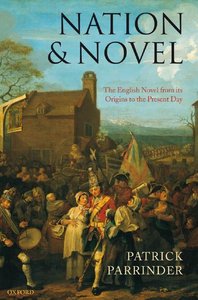
Nation and Novel: The English Novel from Its Origins to the Present Day

Written by son of rambow on Sunday, August 08, 2010

What is "English" about the English novel, and how has the idea of the English nation been shaped by the writers of fiction? How do the novel's profound differences from poetry and drama affect its representation of national consciousness?

Nation and Novel sets out to answer these questions by tracing English prose fiction from its late medieval origins through its stories of rogues and criminals, family rebellions and suffering heroines, to the present-day novels of immigration. Major novelists from Daniel Defoe to the late twentieth century have drawn on national history and mythology in novels which have pitted Cavalier against Puritan, Tory against Whig, region against nation, and domesticity against empire. The novel is deeply concerned with the fate of the nation, but almost always at variance with official and ruling-class perspectives on English society.

Patrick Parrinder's groundbreaking new literary history outlines the English novel's distinctive, sometimes paradoxical, and often subversive view of national character and identity. This sophisticated yet accessible assessment of the relationship between fiction and nation will set the agenda for future research and debate.


Detail:
Patrick Parrinder
“Nation and Novel: The English Novel from Its Origins to the Present Day”
Oxford University Press, USA
2006-04-13
ISBN: 0199264848
512 pages

Read More......

Jeanette Winterson: Sexing The Cherry

Written by son of rambow on Wednesday, December 23, 2009

When The Dog Woman finds a tiny child abandoned in the Thames mud in 17th century London, she adopts him and names him Jordan to always remember his watery origins.

And in the coming years, giantess and boy play their parts in history, from the English Civil War to the restoration to the plague and the Great Fire of London. And Jordan, with his need to roam, sets to sea as an explorer, bringing home the first pineapple to England and meeting fairy-tale princesses on the way.

Sexing the Cherry is an extraordinary and inventive mix. Jeanette Winterson mixes history and fantasy, fairy tales and magic realism in a boisterous and rollicking tale that bends ideas of time and physical reality.

And somehow it all works.

Unsurprisingly, given her own background (see Oranges are Not the Only Fruit), she uses the build-up to the English Civil War and the conflict itself to rail against puritans and religious hypocrites (who overlap here). And she turns conventional morality on its head as Dog Woman acts completely according to her conscience.

But the main themes here are that of finding the self and the nature of relationships: the sexing the cherry of the title is about grafting part of a plant onto another to make a new one. Here, Winterson seems to be saying that relationships make us whole.

Not that those relationships are always easy. Dog Woman and Jordan love each other deeply, but poignantly, neither is able to tell the other what they feel.

And Winterson also explores the idea of heroism and what constitutes it, starting with the 'heroism' of exploration in the 17th century, but also suggesting that there is a heroism in what women do too, as mothers and carers. In what's probably the weakest section of the novel, she brings the plot into the present to focus on environmental campaigners as heroic. It's a noble message, but it feels at odds with the rollicking, colourful, picaresque nature of what has gone before.

The prose is lovely – deceptively simple but with something close a poetic quality about it. And Dog Woman is a magnificent creation.

All in all, a thoroughly enjoyable read.

Read More......

The Believers: Keep the faith

Written by son of rambow on Wednesday, July 08, 2009

Zoë Heller's dark and funny farce of politics and family life impresses Joanna Briscoe


The Believers
by Zoë Heller
308 pages
£16.99

"Eagerly awaited" is a claim that usually carries a squeal of optimism, a dash of spin, the book's readership quietly enthusiastic rather than salivating at the bookshop door. However, five years after Notes on a Scandal - a novel that was Booker-shortlisted, translated into 29 languages and adapted into an Oscar-nominated film - Zoë Heller's latest offering, The Believers, is, quite genuinely, eagerly awaited.

This third novel is more mature than Notes on a Scandal, and radically different in tone and subject matter. The Believers is at heart an American novel: a larger, more considered, layered and utterly assured study of a family driven by political passion whose personal lives refuse to comply with prescribed ideology.

In a 1962 prologue, Audrey Howard meets the politically fervent, loud and energetic Joel Litvinoff while living a quiet London life as a typist. On their second meeting, he suggests she elope with him to his native America and she accepts the challenge. Forward to 2002 New York, neatly avoiding the heartsink of yet another 9/11 novel with glimpses of Ground Zero, and Joel is a celebrated radical lawyer, while Audrey has spent her life upholding both the uncompromising socialist politics the couple espouse and the almost mythical creation that is her husband.

The Believers focuses on this American-English Jewish family shortly after Joel suffers a stroke in the courtroom. His subsequent coma precipitates the unravelling of a family whose supposed political unity has always - quite naturally - been riddled with hypocrisies and clashing convictions. Audrey is by now a hilarious, foul-mouthed harridan: part monster, part inspiring law unto herself, her approach so excoriatingly direct that the reader waits in wincing glee for her next spitting and swearing tirade. The "mark of her unparalleled intimacy with the legend" that is Joel is a "deadpan unimpressibility". She's always been a reluctant mother, but a flicker of maternal impulse is inspired by her adopted son Lenny, to whose drug addiction and wastrel ways she is oblivious, while her two biological daughters, Karla and Rosa, receive little beyond scornful chastisements and dictates about how to live their lives.

Rosa has spent four years in Cuba, wedded to the cause of revolutionary socialism. She had imagined herself "striding along in history's vanguard, like one of those muscular heroines in a Soviet constructivist poster", only to return to New York and attend an Orthodox synagogue. To her atheist family, this is an outrage.

Karla is the rejected, overweight oldest child, abused guardian of family delusions ("there was something in the brutal candour of her mother's sallies that pleased her"), and now the unhappy wife of a man who both resents and looks up to the feted Litvinoffs. An entirely unexpected adulteress, she begins an affair with a man she meets through work. The Litvinoff children's "impeccably progressive, internationalist upbringing" among liberal intelligentsia has left them naive in many ways. Dogma has replaced emotion.

Joel's prognosis is increasingly grim: Rosa is left to struggle with her faith, Lenny with his addictions, and Audrey with everyone she encounters. Into the drama strolls Berenice Mason, armed with proof of her longterm affair with Joel in the form of a young son and paternity payments. This cracks even Audrey's carapace, and the resulting abusive outbursts are gems.

The Believers is an astonishingly well-observed slow burner, its virtuoso prose compressed and beautiful. Zoë Heller possesses true brilliance as a writer. Whether this novel hangs together cohesively is another matter: its intention is at times elusive, its momentum uneven. Despite the buildup of multiple viewpoints and dilemmas, the story itself maintains only a light hold on the reader, its hooks less deep than those of Notes on a Scandal, a novel whose sinister monomania extended an ever-tightening grip. Heller can only be admired for her refusal to crowd-please and for her almost cussed choice of subject matter, but extended scenes of dialogue can lose impact and slow the pace.

As a large, intelligent and stunningly written novel of a dysfunctional New York family, The Believers is strongly reminiscent of Claire Messud's The Emperor's Children. The Litvinoffs' knee-jerk 60s radicalism could be an easy target for mockery, but Heller's touch is light, and she reserves her more vicious satire for the bit-part players. This is a subtle, funny and dark family farce about faith and identity. It fails to satisfy completely, but in its thundering confidence and lyricism, The Believers is the work of a writer at the top of her game. [www.guardian.co.uk]

Read More......

Roger McGough: Pop Poetry in the '60s

Written by eastern writer on Thursday, September 27, 2007

Roger McGough (left) talking to Damian Grant at the Cambridge Seminar 2007

How did a strap-wielding physics teacher affect Roger McGough’s earliest experience of poetry? What was it like to be at the helm of Liverpool’s influential poetry scene in the 1960s? And how did it feel to perform on Top of the Pops with a Number One hit single? At the 2007 Cambridge Seminar Roger engaged in a lively conversation with the British Council’s Senior Literature Consultant, Jonathan Barker, about his rise to becoming one of the UK’s most celebrated living poets.

Having published his autobiography Said and Done and over 40 years’ worth of his poetry in the book Collected Works, Roger fittingly opened the session with a quick reflection of the decade where it all began:

“I wish I had kept a journal in the ‘60s. What was Reg Dwight - before he became Elton John - wearing at The Scaffold recording sessions when he was a backing singer? What did Bob Dylan actually say that night in the Adelphi Hotel? Did I really have a threesome with Marianne Faithfull and Julie Christie, or was I just dreaming? (Just dreaming.) Did Keith Moon and I jump fully clothed into the pool on his 21st birthday? Did John Lennon ever give me back the half-crown he took off the table in Thelma's flat in Princes Avenue? Questions, questions - and I don't have the answers. As Adrian Henri once remarked, plucking a scintilla of nostalgia from his paint-stained beard, ‘If I'd have known that I was living in one of the most exciting periods of recent history, I'd have taken more notice.’”

Jonathan Barker:
In the ‘60s the United States had San Francisco, but Britain had Liverpool. At the time, Allen Ginsberg called Liverpool ‘the centre of the universe’. You were very much part of that scene. Can you talk us through what your background to becoming a poet was like and how you experienced the ‘60s? There certainly aren’t many poets who’ve been at Number One in the singles hit parade.

Roger McGough:
It was strange. I’d grown up in Liverpool with a working-class, Irish-Catholic background. Men of my father’s generation worked on the docks, but I was amongst the first of that post-war generation for whom education was available – I got a scholarship to go to grammar school, and then a university degree. At university I did French and Geography (so I quickly learnt where the capital of France was).

Although I benefited from having an education, I didn’t know what I wanted to do with my life. With my sort of working-class background there wasn’t much encouragement for you if you wanted to do anything within the arts. For instance, I was always told: “What’s the point of drawing? What’s the point of poetry? What’s the point of art? They’re nice things but they won’t put bread on the table. Get a proper job.”

And so I went into teaching while continuing to write poetry. I certainly didn’t enjoy poetry myself when I was at school. In retrospect, it was taught by teachers who probably weren’t interested in poetry themselves. It was in the curriculum so we just had to do it. In fact, the only teacher who did interest me was a man called Brother Ryan (I was taught by an Irish-Catholic teaching order). He terrified us. He used to hit us with a strap when we were naughty. And if you were good you’d still get the strap… He taught physics, and when he came into the classroom he’d talk about physics for a while and then suddenly say: “Ah, to hell with it! Physics: who needs it? What you need is poetry.” And he’d start reciting poetry to the class. He could recite poems by Yeats from the top of his head. When he finished he’d just carry on with the lesson. In a funny way, the poetry from that lesson was more important to us than the poetry from the English lesson – even though the words of Yeats went right over our heads.

Years later when I became a teacher in Liverpool the children were given the same old books that I’d been taught with at school. At the time, I was also writing my own poems – about Liverpool, my grandmother, funny things - so I started to feed the children my own poems instead, not knowing whether they were any good. But the kids loved them. I thought to myself, “Maybe I am a poet. Maybe this is the audience.” My work as a teacher went on for four years, and ever since I’ve been on the run.

During this period I had met a few other people in Liverpool who were also writing poetry, like Brian Patten and Adrian Henri. The city’s poetry scene grew from there. The Beatles had already caused a burgeoning of popular music in Liverpool, and so the city had become not quite the centre of the universe, but certainly a focus of great media interest. The media caught onto our public poetry readings too, and our first poetry book was published 40 years ago this month [July 2007], called The Mersey Sound. It caught the public’s imagination. Prior to that, I think the public believed that poetry belonged to the elite in Oxford, Cambridge or London.

Also, Mike McCartney, John Gorman and I formed the band The Scaffold. Together we did poetry readings and wrote sketches based on comedy and political satire. Brian Epstein became our manager, and we also worked with Mike’s brother, Paul [The Beatle]. The next thing we knew we were making records and had hit singles with Thank U Very Much and Lily the Pink. That was very strange – all of a sudden we were musicians and performing on Top of the Pops. A lot of critics at the time thought that you couldn’t be a serious poet if you were writing pop songs as well. It was a question of the divide between ‘high art’ and ‘low art’. I didn’t see it as a problem. Sometimes I was doing Top of the Pops in a white suit, singing and playing guitar, and then rushing off to do Late Night Line Up and talking with people like Yehudi Menuhin about intellectual topics.

JB:
You once said that The Scaffold was taken over by a sense of ‘creeping professionalism’.

RMcG:
Yes, because at first we happily combined poetry, comedy, satire and music in our act and we were very popular with students and Edinburgh Festival-goers. Once we had the hits with Thank U Very Much and Lily the Pink [the latter reached the Number One spot in 1968], the white suit suddenly became a sort of trademark and we were doing the cabaret circuit, always accompanied by a band. Our act became less about poetry and comedy and more about music. We were caught up in a treadmill. It all became very silly.

JB:
There was an influential LP at the time, The Incredible New Liverpool Scene [Roger appeared on the record alongside Adrian Henri and the guitarist Andy Roberts]. Having poets reading their own works on an LP was a new way of bringing poetry to the people, and it must’ve done a lot to increase the popularity of contemporary poetry.

RMcG:

Yes, I think it did. Also, the book The Mersey Sound sold over a million copies, which is a lot for a poetry book. It was popular with students and I think it helped to make poetry ‘cool’.

JB:
The Mersey Sound actually became one of the bestselling poetry anthologies of all time. It was part of a wonderful series of books called The Penguin Modern Poets, and each book featured the works of three selected poets. Two of these books were really popular: number four, which featured Gregory Corso, Lawrence Ferlinghetti and Allen Ginsberg, and number 10, which featured Adrian Henri, Brian Patten and you. I remember visiting friends’ flats at that time and seeing that they all owned the LP and those two books.

We really should pay homage to you and your generation of poets from Liverpool who in fact started the scene as we know it today. Nowadays you can easily find poetry readings taking place in towns and cities all over the UK - we take it for granted that there’s a live poetry scene in this country. There was once a time when a poetry reading was something that took place around a grand piano with a vase of flowers on it.

RMcG:
Yes, I remember going to poetry readings like that myself where sometimes the poets were actually quite condescending to those who had come to listen to the poetry, and they wouldn’t come properly prepared.

We treated our poetry readings like a piece of theatre, and I suppose we made use of our experience of performing with The Scaffold, too – getting used to standing on stage, speaking into a microphone, working out exactly what we were going to say beforehand and timing our pieces to make sure they didn’t go on for too long. We’d also vary the performance content so that we included light-hearted things with more serious stuff, as well as using music. Our public performances were greatly influenced by those that had taken place in San Francisco by Beat poets such as Ginsberg, Ferlinghetti and Corso. Poetry had never been associated with music or theatre before, but our generation was concerned with taking it out of the library and bringing it to the people.

Further reading

* Roger McGough's profile page on the Contemporary Writers website
* McGough, Roger: Collected Poems (Penguin, 2003)
* McGough, Roger: Said and Done (Century, 2005)

Read More......

Quote on Art and Literature

    "There is only one school of literature - that of talent."
~ Vladimir Nabokov (1899 - 1977)


Want to subscribe?

Subscribe in a reader Or, subscribe via email:
Enter your email here:

Top Blogs Top Arts blogs

Google