The Greatest Literary Works

literary works documentation. essay on literature. student paper. etc

The Count of Monte Cristo: Which Translation Version to Get

Written by son of rambow on Wednesday, June 08, 2011

This review is for those who've already decided they want to read The Count of Monte Cristo (you won't regret it!), and don't know which version to get.

Short answer: see review title, duh!

The Count of Monte Cristo is my favorite book, and I've read several translations, both abridged and unabridged.

TRANSLATION
Robin Buss translation is the most modern, and reads most fluidly. A quick example comparing this translation with the one found on Project Gutenberg:

PG - His wife visited for him, and this was the received thing in the world, where the weighty and multifarious occupations of the magistrate were accepted as an excuse for what was really only calculated pride...

BUSS - His wife visited on his behalf; this was accepted in society, where it was attributed to the amount and gravity of the lawyer's business -- when it was, in reality, deliberate arrogance...

Buss's work reads like the book was written in English. The two or so times that the work is nearly untranslatable, Buss makes a footnote about it (eg, an insinuated insult using the formal "vous" instead of the familiar "tu"). Other translations just skip the subtlety. The most common translation out there (uncredited in my version) reads like a swamp. Trust me, get Buss.

ABRIDGED V UNABRIDGED
Abridged versions of this book rarely say "abridged." You can tell by the size: abridged is 500-700 pages, unabridged is 1200-1400 pages. Go for the unabridged.

The abridged version is VERY confusing! Pruning 1200 pages down to 600 leaves a lot of plot on the cutting room floor. Suddenly, arriving at dinner are 4 new characters; it's very tiring to try to keep up with the hole-ridden story of the abridged versions. And you know where the holes are? Publishers "clean up" the book by omitting the affairs, illegitimate children, homosexuality, hashish trips, etc.

As an added bonus in the Penguin Classics edition, there's a wonderful appendix bursting with footnotes to explain all the 19th century references, and a quick guide to the rise and fall of Napoleon (crucial to the politics in the story).

Hope this helps. Get the book and start reading!

Read More......

10 Classical Romance Novels to Read

Written by son of rambow on Tuesday, May 03, 2011

Sometimes classic novels provide more poignant love stories than bestsellers. Classic romantic novels are those books that we read over and over, those tales of passion and desire (and maybe just a touch of steam) that have stood the test of time as great manuals of what romance really is.


1. War and Peace by Leo Tolstoy.

This massive work of genius, often relegated to the role of a doorstop, encompasses the totality of love. Through the characters search and trails with both God and romantic love, we see many takes on the purpose of life. Anyone looking for a good romantic read will find Natasha’s forays into love, coupled with the depth of the many characters relations the paradigm of romance.


2. Swan in Love (Un Amour de Swan) by Marcel Proust.

Perhaps, the greatest romantic tale of literature hides within Proust’s magnum opus. Swann in Love, a small fragment of his lengthy masterpiece, demonstrates the destruction love ravishes upon us. Swann, a French aristocrat, falls deeply in love with his mistress who holds very little affection for him in return. Unlike the classic fairytale, love mars both his social life and his happiness as his attachment to his mistress increases.


3. Madam Bovary by Gustave Flaubert.

The always classic Madame Bovary brings us another example of love’s destructive power. Here we see a woman ruined by flightiness and dreams of happiness. The very fairy tales we secretly devour destroys a simple woman looking for grandeur beyond her means. At the same time, her husband maintains a simple, obtainable love.

4. The Tale of Genji, Murasaki Shikibu

trans. into English by Royall Tyler) Some literary types tell us that this text is considered the “first novel”, or at least the first “romantic novel” – it was written sometime between 1002 and 1020 CE by a Japanese noblewoman. The text tells the story of Genji the son of a Japanese emperor, who is relegated to citizen status for political reasons and has to work hard to attract women. There is no traditional “plot”, rather the text simply tells stories over time, in succession. We read about Genji’s early loves, his first unsatisfying romantic experiences, even his marriages and divorces. A powerfully romantic and ancient text, The Tale of Genji is also not very popular or well read. Treat yourself to a unique reading experience, and pick of the translation by Royall Tyle.

5. Jane Eyre, Charlotte Bronte

This novel from the mid-19th century is still a classic romantic tale because the story is so powerful, and the characters incredibly vibrant. Featuring many elements of the classic gothic novel (a kind of theme on this list of classic romantic novels) Jane Eyre tells the story of the title character’s life in the form of a simple narrative divided into parts. We see Jane Eyre in her childhood, her education, her first love, separation from love, and reunion. Studied in schools all over the world, there is perhaps no better known example of gothic romance.

6. Pride and Prejudice, Jane Austen

This list would not be complete without including Jane Austen, whose books have stirred our hearts for almost two centuries. This novel follows the romantic adventures of the Bennet sisters, whose relationships grow from flirting and courting to proposal and marriage. This is a “classic romantic novel” by anyone’s definition, and is often considered to be the prolific Jane Austen’s best novel.


7. The Fox by D.H. Lawrence

Set in Berkshire, England during the first world war, this novella by one of the West’s great romantic writers is often overlooked as a wonderful piece of literary romance. The story revolves around two sisters who have taken over a farm – they survive hardship after hardship against all odds. The farm is their entire world and their safe place until a young and attractive soldier walks in and upsets their normal lives. If you’re in the mood for a shorter classic romance, Lawrence’s fascinating novella will satisfy you.


8. The Great Gatsby, by F. Scott Fitzgerald.

This is the quintessential tale of obsessive love and jealousy. It's about Gatsby, who loves Daisy, who is married to someone else, and how Gatsby does everything to win back her love. Sad and romantic!!

9. Othello, by Shakespeare.

This one isn't exactly a book, it's a play. This is by far my favorite Shakespeare play- I think it's ten times better than Romeo and Juliet! It's about Othello, who goes crazy with jealously when his frenemy Iago convinces him that his wife Desdemona is having an affair. Tragic! Romantic! Beautiful!

10. 5. Tristan and Isolde, (various)

A classic myth available in many different novels and books (as well as in Hollywood), this tale handed down to us from Celtic traditions centers on chivalry and meditations on doomed love and romance. There is plenty of action, including plenty of jousting and swordfights, and the unforgettable scene of our hero Tristan’s death at the hands of six knights. Looking for a classic romantic romance set in the Middle Ages? Pick up any of the hundreds of versions of the story of Tristan and Isolde.

Read More......

20 Classic Books to read before you die

Written by son of rambow on Wednesday, April 20, 2011

1: Moby Dick
"Call me Ishmael." With these three words, Herman Melville began Moby Dick - perhaps the most important American novel of the 19th Century. Yet this great writer was almost forgotten by the time he died, and was even listed as Henry Melville in the New York Times obituary.

The downturn in his career was actually due to Moby Dick. Melville had previously been a successful writer of maritime adventure stories, but then he penned this ambitious tale of a maddened sea captain, obsessed with hunting down a white whale, and it proved a little too much for readers at the time.

Even critics were puzzled by Melville’s poetic, almost Biblical style of writing. It was only after his death that the book became accepted as the masterpiece it is - a compelling story that that also tackles big ideas like man’s place in nature, the need for meaning in life, and the nature of America itself.


2: 19 Dead Souls

Don’t be fooled by the morbid-sounding title: Dead Souls is actually one of the wittiest books of the 19th Century. It was written by Nikolai Gogol - not particularly famous outside Russia, but actually a major influence on both Tolstoy and Dostoevsky.

Dead Souls is his only novel, and tells the story of an enterprising young man who travels around Russia buying up "dead souls" – that is, peasant workers who have died, but who are still registered as living in the census records. He purchases them from landowners, hoping that it will create the illusion that he owns many workers himself, and so allow him to extract huge loans from the government.

A broad and brilliant satire on society – Gogol caricatures and parodies nearly everyone, from gossiping housewives to cruel landowners to pompous officials - Dead Souls is also considered the first-ever Russian novel.


3: Bleak House

It may not be as famous as Oliver Twist and Great Expectations, but Bleak House has got to be Charles Dickens’s greatest novel. He crammed in everything he knew about Victorian London, and reading the result is the next best thing to time travel.

On the surface it’s a satirical (and still relevant) assault on the British legal system – how corrupt lawyers, aristocrats and businessmen use the courts for their own ends. Satire makes up just one layer of the novel however - it’s also a story of forbidden love, family secrets and intrigues.

And, being Dickens, the book is jam-packed with unforgettable characters, not least of all London itself– the sprawl of the city and the curling tentacles of fog have never been depicted so powerfully. This is escapism at its most beguiling.


4: Moll Flanders

Daniel Defoe’s best-known book will always be Robinson Crusoe, but a far bigger and more exciting read is Moll Flanders, his other great novel.

Moll is the daughter of a convict who's determined to become a respectable, wealthy lady and what follows is an often amusing, often tragic tale, as Moll gets married (repeatedly), commits accidental incest, becomes a prostitute, con woman and thief, and is made all too familiar with the walls of a prison cell.

A breathless ride through the muck and glitter of the 18th Century, the novel also gives us one of the most charismatic leading ladies in literature. Beautiful, witty and ruthless, Moll is thoroughly ahead of her time. Yet she’s also endearingly sweet and vulnerable, and you’ll find yourself egging her on, even as you wish she’d sort herself out.


5: Pride and Prejudice

Most people know a thing or two about Pride and Prejudice – if only because of Colin Firth’s dip into that pond. But, if you're only familiar with the story from seeing it on the screen, it’s well worth going back to the source.

Jane Austen’s best-loved novel is funny from the first page, and is just as much a comedy as a romance. Austen manages to sum up pretty much everything about romance and courtship – the awkward flirtation, the mixed messages, the way love can make fools of even the smartest and strongest of us.

Everyone knows Darcy, of course: one of the great romantic heroes of literature (which is quite an achievement considering how stuffy and humourless he is). But there are a whole gallery of characters to savour, from the grotesque Lady Catherine de Bourgh right up to the heroine Elizabeth Bennet – a sassy, witty gal who’d fit into the 21st Century with ease. This is chick-lit at its best!


6: The Tenant of Wildfell Hall

Anne Bronte has never found the same fame as her sisters Charlotte and Emily, which isn’t really fair because The Tenant of Wildfell Hall is one of the great 19th Century novels.

With it, Anne struck an early blow for women’s lib - it tells the story of a beautiful woman who leaves her womanising husband to make her own way in life. The heroine, Helen Huntingdon, has got to be one of the strongest female leads in English fiction – she’d certainly give Lizzy Bennet a run for her money.

However, this is a far cry from the wry, ordered world of Jane Austen. Helen’s story takes in alcoholism, decadent sex and social scandal, and the emotional turbulence of the novel almost rivals that of Wuthering Heights.


7: Vanity Fair

Charles Dickens may have been king of literary London in the mid-19th Century, but one arch-rival and pretender to the throne was William Makepeace Thackeray.

Determined to out-do Dickens, Thackeray produced a storming, rip-roaring epic of British life, gave it an utterly wicked heroine and called it Vanity Fair. While Dickens was certainly the writer with the wider scope and bigger heart, Thackeray was crueller, cooler and completely unsentimental.

Vanity Fair is the story of Becky Sharp, a deliciously wicked social climber who uses her looks, charm, and a fair bit of deceit, to bewitch men and amass as much money as possible. It's a biting satire on British society, and the hypocrisies of the upper classes, and definitely the Victorian novel for those looking for a proper page-turning romp.


8: Middlemarch

On the face of it, a novel subtitled "A Study of Provincial Life" may not sound like the most exciting read in the world. But George Eliot's Middlemarch is a strong contender for the title of greatest British novel of the 19th Century.

Eliot uses a small, fictitious town as a model for civilisation in general, exploring the nature of love, integrity, family, goodness and corruption. The central character, Dorothea, is a living saint – or at least wants to be one. Yet the irony is that choosing the right path for the right reasons is exactly what leads her into all kinds of trouble.

This is as big as British novels get – if the epic Russian novelist Tolstoy had been born in the UK, he would have come up with something like this. Luckily, we had the remarkable Eliot to do it instead, and she gave us what none other than Virginia Woolf later called "one of the few English novels written for grown-up people."


9: War and Peace

Here it is: the daddy of classic novels, the epic tale that many have called the greatest book of all time. But don’t be put off by its reputation, because this is a feast you’re going to enjoy.

Set in the early years of the 19th Century, Leo Tolstoy's masterpiece follows a cluster of Russian aristocrats as they face an invasion by Napoleon’s army. While the many battle scenes are vivid and suitably bloody, the book really excels when it comes to the conflict in human relationships. After all, Tolstoy was fascinated by one premise above all others - how does one keep one's morals intact when faced with a flawed and evil world?

With a book as wide-ranging as this, it’s no wonder so many other writers have compared Tolstoy to Shakespeare (although, ironically, Tolstoy himself never liked Shakespeare that much). War and Peace is one of those books you live rather than simply read. Make time for it, and you’ll see what all the fuss is about.


10: Madame Bovary

Shy, arrogant and disgusted by society - that was French novelist Gustave Flaubert. But this same misanthrope was also the man behind one of the most sensitive and moving portrayals of a woman’s life ever written.

Emma Bovary's husband is the classic “nice guy” – reliable, comforting and utterly dull. So Emma, desperate for passion and excitement, embarks on a series of heated affairs - but tragedy is the inevitable outcome. This exquisite book caused a scandal when it was published, and French public prosecutors wanted it banned for obscenity. Instead it became a bestseller and its clean, crisp style has influenced countless writers since.

That style was the result of Flaubert’s obsessive perfectionism – he would literally spend a week writing a single page, re-writing each sentence until everything was just right. The result is perhaps the ultimate story of adultery, and what drives people to betray each other.


11: Crime and Punishment

Few novels have been as influential and adored as Crime and Punishment. It was written by Fyodor Dostoevsky, the legendary Russian novelist who was worshipped by everyone from Sigmund Freud to Einstein.

The novel itself tells the intense tale of a young impoverished student who sees himself as "extraordinary" and exempt from the normal rules of society. This gives him the right (he feels) to murder a pawnbroker and take her money. But, after butchering the unfortunate victim with an axe, he's plunged into guilt and self-loathing, while a sly detective closes in on him all the while...

Despite the weighty themes of guilt and redemption, Crime and Punishment is a gripping rollercoaster of a book. A thriller with brains, it’s something that will stay with you long after you reach the dramatic climax.


12: Daniel Deronda

Not content with having produced the gobsmacking masterpiece that is Middlemarch, George Eliot ended her career with yet another great novel: Daniel Deronda. It's famous now as one of the first – and most sympathetic – novels about British Jews.

Daniel Deronda, the sweet-natured and handsome hero, rescues a beautiful singer from killing herself in the Thames, and this leads him to explore and become a part of the Jewish community in London. Eliot cleverly weaves Daniel's journey of self-discovery into the story of Gwendolen, a young woman who begins as a spoilt society girl but slowly redeems herself by helping others.

For a book about Victorian society, it is startlingly relevant to today’s world events – one of the great themes is the migration of Jews to that part of the Middle East where Israel would later be formed. Yet is also a love story, and Eliot never allows the political and philosophical ideas to overshadow the people she creates.


13: Scarlet and Black

The French writer Stendhal had a way with 19th Century ladies. In fact, he was almost addicted to romance and seduction, which might explain the womanising hero of his classic novel Scarlet and Black.

It follows the unscrupulous young cad Julian Sorel as he uses his looks and intelligence to charm his way through French society in the years following Napoleon’s fall. Unfortunately, he’s less than wise in his choice of conquests, and his affair with the wife of a mayor begins a chain of events that put a bit of a dampener on his quest for wealth and power.

But is Julian to be admired or not? This question is what makes the novel so intriguing. The book challenges our own ideals by presenting a person who is guilty of deceit and selfishness, but who is no worse than many of the people he manipulates. By examining his motives, you’ll find yourself questioning your own take on the world.


14: Persuasion

Jane Austen’s novels are all incredibly famous – except this one. For some reason, Persuasion has never enjoyed the same adulation as Emma, Pride and Prejudice and Sense and Sensibility, yet in some ways it's her richest work.

That could be because it was her last and was, in fact, published after her death. Unlike Austen's other books, which focus on budding society girls experimenting with first loves, this one delves into the life of a more mature woman. The heroine, Anne Elliot, is persuaded to refuse an offer of marriage because her suitor isn't 'respectable' enough. Many years later, Anne's former love returns as a wealthy man - but is it all too late?

Persuasion is thoughtful and nostalgic - it’s fascinating to see Austen tackle themes of regret and lost love, rather than straightforward courtship. For that reason, it’s the perfect complement to her other masterpiece, Pride and Prejudice.


15: Heart of Darkness

Joseph Conrad produced a number of genuine classics but his best work is the relatively short Heart of Darkness - perhaps the single finest attack on colonialism ever written.

It tells of Marlow, an Englishman who takes a consignment of ivory down the Congo River in a Belgian-occupied area of Africa. During the journey he witnesses many atrocities carried out on the native Africans by the colonialists, and learns of an ivory trader named Kurtz who has set himself up as a demigod among the tribes of the region.
With Kurtz, Conrad shows us how colonialism – and the idea of "civilising" other races – can backfire and corrupt the occupying forces. It's a potent fable that can be applied to many other moments in history - Francis Ford Coppola famously used it to study the Vietnam war in Apocalypse Now.


16: The Adventures of Huckleberry Finn

"All modern American literature comes from one book by Mark Twain called Huckleberry Finn. There was nothing before, there has been nothing as good since."

That was Ernest Hemingway's opinion and, while he was probably being a bit over-the-top, it does say something about just how important Huckleberry Finn is. Twain intended it as a simple adventure yarn, but the book actually ended up being a call to freedom and rebellion.

Written from Huck’s point of view (and the American slang style is one of its many marvels), the story follows the teenager as he and a freed slave named Jim sail down the Mississippi on a raft. Along the way they encounter all manner of undesirable people and situations, which strengthens their resolve to reject mainstream society.

The book’s savage attack on the evil of slavery is what gives it power, but it’s also a beautiful tale of childhood, contrasting the innocent idealism of the young with the violence and corruption of the adult world. Take a look, and see why Hemingway was in such awe...


17: The Picture of Dorian Gray

This is the one-and-only novel published by the legendary wit Oscar Wilde and it's just as deliciously wicked as you’d expect a Wilde work to be. Dorian is a strikingly beautiful and vain young man who wishes he'd never grow old. The wish comes true, and instead it's a portrait of Dorian which begins to age – and then bears the signs of his growing cruelty and corruption.

This is Wilde’s take on the old Faust myth and it's a classic of late Victorian literature, full of debauched dandies smoking opium cigarettes whilst discussing art, sex and morality. Indeed, it was considered somewhat shocking in its day, particularly because of the undercurrent of homosexuality.

It's a great read but, if nothing else, you should give it a go if only to arm yourself with some killer one-liners to deploy at your next dinner party!


18: Tristram Shandy

When a clergyman named Laurence Sterne published Tristram Shandy in the mid-18th Century, the sheer originality (and strangeness) of the text caused many a critic to roll their eyes. Even Samuel Johnson pronounced: "Tristram Shandy will not last!"

But it did last - perhaps because the book’s sense of humour is shockingly modern, filled with so many clever tricks, bawdy gags and wantonly silly interludes that you’d think the Monty Python team wrote it (while drunk).

The plot itself is simple - it’s the story of the life of a chap named Tristram Shandy, as recounted by him. But it’s the blissfully chaotic style that makes it so extraordinary. Shandy begins with his parents in bed, conceiving him, and goes off on so many wild tangents that he’s not even born until hundreds of pages in.

Packed full of sly jokes, strange drawings and crazed misadventures, it’s perhaps the wackiest classic of all time. It was also Virginia Woolf’s favourite book, so isn’t it time you had a dose of Shandy?


19: Dracula

It may not be as beautifully written as some of the other books on our list, but Dracula is probably the best known of them all. After all, Bram Stoker’s novel gave the world a character so iconic that we’ve seen him in films, TV shows, comics, cartoons, musicals and computer games.

Yet the book is much more than just the story of a blood-sucking count - it’s a fascinating study of Victorian morality and sexuality. Dracula himself is a tempter who utterly corrupts sweet Victorian maidens, and it’s up to the gang of waistcoated heroes to see off this wild creature and restore proper etiquette and order.

Dracula remains a great horror story, taking us from Transylvania to England and back again, so forget Buffy, Interview with the Vampire and all the countless imitators - snuggle up with the original Dracula and get to know the vampire who started it all!


20: Wuthering Heights
And finally... well, we couldn't really leave Emily Bronte's ubiquitous tale of passion, tragedy and temperamental tantrums off the list, could we?

As surely everyone knows, at the heart of Wuthering Heights is Heathcliff – the ultimate literary bad boy, whose love for Yorkshire maiden Cathy is balanced only by his hatred for just about everybody else. And, when Cathy chooses a more respectable man as her husband, it drives Heathcliff into a fury that destroys both their lives.

But that’s not even the half of it. Because, while everyone thinks of the Bronte novel as the story of Cathy and her rough, dangerous, scheming suitor, it also chronicles the lives of a second generation who are affected by Heathcliff’s need for vengeance. It’s an epic, compelling and quietly complex tale.

-------
http://uktv.co.uk/yesterday/stepbystep/aid/574462

Read More......

Romance of the Three Kingdoms, English Translation Problems

Written by son of rambow on Tuesday, February 15, 2011

"Romance of the Three Kingdoms" is possibly the most famous and important novel in classic Chinese literature. Not only is it the earliest of the "Four Great Books" (as evidenced by its more archaic language), but it created a complete cultural phenomenon whose impact is still fresh today -- just ask all the young people today who, without having read a word of the book, still know the characters from the strategy and fighting video games released by the company Koei. And how many literary works can claim to have had a direct impact on history as this book, which was used as a strategy text by the great Manchurian leader Nurhachi and his son Hongtaiji?

I'd read the original archaic text when I was about eight years old, so obviously my views will be heavily slanted by my familiarity with this text. On approaching this translation, what I find is a well done, respectful and informative translation that doesn't quite nail the tone of the original text, but will be a good read for modern readers who don't read Chinese.

And to be honest, Chinese is extremely hard to translate into English. Just the fact that subjects, articles and pronouns are often omitted from a sentence is enough to cause nightmares for a Chinese-English translator. And even by Chinese standards, The Three Kingdoms is a work whose linguistic economy is staggering. In one page, this book can convey the deaths of half a dozen characters, three to four battles, multiple schemes, and include four or five "tribute" poems, to boot. Such is the style of this work, and it could not have been easy for translator Moss Roberts to adapt this style into English. And he has done the job remarkably, for though I don't think he was able to convey the flavour and rhythm of the original language (the question is, also, whether that would have been possible), his translation makes a good read, and strives to be faithful to the original text, down to the chapter divisions and the inclusion of the "tribute" poems which frequent the book. This was an essential piece in the style of the book and I was joyed to see the device retained.

There are instances scattered throughout where I felt the tone of the language may have been misinterpreted, or diluted by the language barrier. Obviously, I'm not a Chinese professor (as Prof. Roberts is), but as a native speaker, I felt his translations sometimes didn't quite hit the mark. For example, in the original text, one poem on the character Cao Cao distinctly used a word which meant "deception" or "guile", but Prof. Roberts adapted it to "craft", which dilutes the disapproving tone of the original. When Yuan Shao refused aid to Liu Bei on account of his son's illness, his advice to the messenger was "if he is in trouble, he may seek refuge with me", which suggests patronage, not "find refuge north of the river", which suggests a tactical manoeuvre related to geography. These are but two examples and you can certainly argue that the meaning of the original text is up for grabs, but as a Chinese native speaker and reader, one who has grown up with this text and re-read the book hundreds of times, I still find the translation a little off. There is also no attempt at creating period flavour in the language -- the translation is modern, not aiming to add archaic English flavour to try to reflect the age of the original Chinese text. This may be a good point, however, since the use of archaic English added to the language barrier might have resulted in a book that's very difficult to read. I think Prof. Roberts sacrificed flavour for clarity, a fair tradeoff to the benefit of the translation.

Again, the question is whether an English translation (or any other translation) could ever be accurate in this way to the original. Personally, I do think many of the discrepancies in meaning could have been avoided, or ameliorated. However, as aforementioned, for a reader who's never read the original, this issue won't affect his/her enjoyment of the text. Just the fact that there is a translation of this extremely important work of Chinese literature is a cause for celebration, and for those people new to this realm, this set of books is a great discovery.

Read More......

Romance of the Three Kingdoms

Written by son of rambow on Saturday, February 12, 2011

A masterpiece of eastern literature

Romance of the Three Kingdoms, written by Luo Guanzhong in the 14th century, is a Chinese historical novel based on the events in the turbulent years near the end of the Han Dynasty and the Three Kingdoms era of Chinese history, starting in 169 and ending with the reunification of the land in 280.

The story (part historical, part legend, and part myth) chronicles the lives of feudal lords and their retainers, who tried to replace the dwindling Han Dynasty or restore it. While the novel actually follows literally hundreds of characters, the focus is mainly on the three power blocs that emerged from the remnants of the Han Dynasty, and would eventually form the three states of Cao Wei, Shu Han, and Eastern Wu. The novel deals with the plots, personal and army battles, intrigues, and struggles of these states to achieve dominance for almost 100 years. This novel also gives readers a sense of how the Chinese view their history as cyclical rather than linear (as in the West). The opening lines of the novel summarize this view: The world under heaven, after a long period of division, tends to unite; after a long period of union, tends to divide. (話說天下大勢,分久必合,合久必分。)

Romance of the Three Kingdoms is acclaimed as one of the Four Great Classical Novels of Chinese literature; it has a total of 800,000 words and nearly a thousand dramatic characters (mostly historical)[3] in 120 chapters. It is arguably the most widely read historical novel in late imperial and modern China.

Read More......

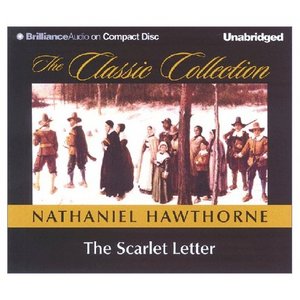
The Scarlet Letter by Nathaniel Hawthorne

Written by eastern writer on Sunday, October 17, 2010

The classic American story of Hester Prynne, accused of adultery, ostracized by her Puritan community, and abandoned by both her lover and her husband.

The story opens in Puritan Boston, a settlement only fifteen or twenty years old. A young woman stands on a scaffold clasping a three-month-old baby. As a married woman with a missing husband and a new baby, Hester Prynne could have been sentenced to death for the crime of adultery. Instead she is condemned to always wear the letter A as a badge of her shame. As she stands there, she sees her long-missing husband, who has been held captive by Indians. While the town chorus is murmuring against her and her old and unattractive husband stares silently at her, the young and handsome clergyman publicly demands the name of her partner in crime - while desperately praying that she won't reveal him.

The Scarlet Letter rightfully deserves its stature as the first great novel written by an American, the novel that announced American literature equal to any in the world.


The Scarlet Letter {Audio with Text}
Nathaniel Hawthorne | English | Brilliance Audio: CD Unabridged Library Edition | August 1, 2001 | ISBN-10: 1587886111 | 240.91 MB | MP3+PDF

The classic American story of Hester Prynne, accused of adultery, ostracized by her Puritan community, and abandoned by both her lover and her husband.

Part1
| Part2| Part3

Text

Read More......

10 "Obscene" Literary Classics

Written by son of rambow on Monday, September 27, 2010

When the Supreme Court codified obscenity law in Miller v. California (1972), it established that a work could not be classified as obscene unless it could be demonstrated that "taken as a whole, (it) lacks serious literary, artistic, political, or scientific value." But that ruling was hard-won; in the years leading up to Miller, countless authors and publishers were prosecuted for distributing works that are now considered literary classics. Here are a few.

1. "Ulysses" (1922) by James Joyce
When an excerpt from Ulysses was serialized in a 1920 literary magazine, members of the New York Society for the Suppression of Vice were shocked by the novel's masturbation scene and took it upon themselves to block U.S. publication of the full work. A trial court reviewed the novel in 1921, found it to be pornographic, and banned it under obscenity laws. The ruling was overturned 12 years later, allowing a U.S. edition to be published in 1934.

2. "Lady Chatterley's Lover" (1928) by D.H. Lawrence
What is now Lawrence's best-known book was just a dirty little secret during his lifetime. Privately printed in 1928 (two years before Lawrence's death), this subversive tale of adultery between a rich woman and her husband's servant went unnoticed until U.S. and UK publishers brought it to press in 1959 and 1960, respectively. Both publications inspired high-profile obscenity trials--and in both cases, the publisher won.

3. "Madame Bovary" (1857) by Gustave Flaubert
When excerpts from Flaubert's Madame Bovary were published in 1856 France, law enforcement officials were horrified at Flaubert's (relatively non-explicit) fictional memoir of a physician's adulterous wife. They immediately attempted to block full publication of the novel under France's strict obscenity codes, prompting a lawsuit. Flaubert won, the book went to press in 1857, and the literary world has never been the same since.

4. "The God of Small Things" (1996) by Arundhati Roy
The God of Small Things earned the young Indian novelist Roy millions of dollars in royalties, international fame, and the 1997 Booker Prize. It also earned her an obscenity trial. In 1997, she was summoned to India's Supreme Court to defend against a claim that the book's brief and occasional sex scenes, involving a Christian woman and a low-caste Hindu servant, corrupted public morals. She successfully fought the charges, but has yet to write her second novel.

5. "Howl and Other Poems" (1955) by Allen Ginsberg
"I saw the best minds of my generation destroyed by madness...," begins Ginsberg's poem "Howl," which reads like it could be a reasonably good (if unconventional) commencement speech or the world's worst Easter homily. A profane but fairly non-explicit metaphor involving anal penetration--tame by the standards of South Park--earned Ginsberg an obscenity trial in 1957, and transformed him from an obscure Beatnik poet into a revolutionary poet-icon.

6. "The Flowers of Evil" (1857) by Charles Baudelaire
Baudelaire didn't believe that poetry has any real didactic value, arging that its purpose is to be, not to say. But to the extent that Flowers of Evil is didactic, it communicates the very old concept of original sin: that the author is depraved, and the horrified reader even more so. The French government charged Baudelaire with "corrupting public morals" and suppressed six of his poems, but they were published nine years later to critical acclaim.

7. "Tropic of Cancer" (1934) by Henry Miller
"I have made a silent compact with myself," Miller begins, "not to change a line of what I write." Judging by the 1961 obscenity trial that followed U.S. publication of his novel, he meant it. But this semi-autobiographical work (which George Orwell called the greatest novel written in English) is more playful than lurid. Imagine what The Unbearable Lightness of Being might be like if Woody Allen wrote it, and you have the right idea.

8. "The Well of Loneliness" (1928) by Radclyffe Hall
The Well's semi-autobiographical character of Stephen Gordon is literature's first modern lesbian protagonist. That was enough to get all copies of the novel destroyed following its 1928 U.S. obscenity trial, but the novel has been rediscovered in recent decades. In addition to being a literary classic in its own right, it is a rare time capsule of frank early 20th century attitudes towards sexual orientation and sexual identity.

9. "Last Exit to Brooklyn" (1964) by Hubert Selby Jr.
This dark collection of six shockingly contemporary stream-of-consciousness short stories tells of murder, gang rape, and grinding poverty set against the backdrop of the sex trade and Brooklyn's underground gay community. Last Exit spent four years in the British court system before it was finally declared not to be obscene in a landmark 1968 ruling.

10. "Fanny Hill, or Memoirs of a Woman of Pleasure" (1749) by John Cleland
Fanny Hill holds the distinction of being the longest-banned book in U.S. history. It was initially declared obscene in 1821, a ruling that was not overturned until the U.S. Supreme Court's landmark Memoirs v. Massachusetts (1966) decision. During those 145 years, the book was forbidden fruit--but in recent decades, it has attracted little interest from non-scholars.

Read More......

The Arabian Nights (Translation)

Written by eastern writer on Saturday, July 24, 2010

Translated by Sir Richard Burton

Content:
• The Story of King Shahryar
• The Tale of the Bull and the Ass
• The Fisherman and the Jinni
• The Tale of the Ensorceled Prince
• The Porter and the Three Ladies of Baghdad
• The First Kalandar's Tale
• The Second Kalandar's Tale
• The Third Kalandar's Tale
• The Eldest Lady's Tale
• The Tale of the Three Apples
• Tale of Nur Al-Din Ali and His Son Badr Al-Din Hasan
• The City of Many-Columned Iram and Abdullah Son of Abi Kilabah
• The Sweep and the Noble Lady
• The Man Who Stole the Dish of Gold Wherin the Dog Ate
• The Ruined Man Who Became Rich Again Through a Dream
• The Ebony Horse
• The Angel of Death With the Proud and the Devout Man
• Sindbad the Seaman and Sindbad the Landsman
• First Voyage of Sindbad Hight the Seaman
• The Second Voyage of Sindbad the Seaman
• The Third Voyage of Sindbad the Seaman
• The Fourth Voyage of Sindbad the Seaman
• The Fifth Voyage of Sindbad the Seaman
• The Sixth Voyage of Sindbad the Seaman
• The Seventh Voyage of Sindbad the Seaman
• The Lady and Her Five Suitors
• Khalifah The Fisherman of Baghdad
• Abu Kir the Dyer and Abu Sir the Barber
• The Sleeper and the Walker
• Story of the Larrikin and the Cook
• Alladin; or the Wonderful Lamp
• Ali Baba and the Forty Thieves
• Conclusion


Join the Discussion
"What is your favorite scary tale?"
Join the Forum Discussion...

Related Resources
• Edgar Allan Poe
• Book Reviews


The Story of King Shahryar

The Tale of the Bull and the Ass

The Fisherman and the Jinni

The Tale of the Ensorceled Prince

The Porter and the Three Ladies of Baghdad

The First Kalandar's Tale

The Second Kalandar's Tale

The Third Kalandar's Tale

The Eldest Lady's Tale

The Tale of the Three Apples

Tale of Nur Al-Din Ali and His Son Badr Al-Din Hasan

The City of Many-Columned Iram and Abdullah Son of Abi Kilabah

The Sweep and the Noble Lady

The Man Who Stole the Dish of Gold Wherin the Dog Ate

The Ruined Man Who Became Rich Again Through a Dream

The Ebony Horse

The Angel of Death With the Proud and the Devout Man

Sindbad the Seaman and Sindbad the Landsman

First Voyage of Sindbad Hight the Seaman

The Second Voyage of Sindbad the Seaman

The Third Voyage of Sindbad the Seaman

The Fourth Voyage of Sindbad the Seaman

The Fifth Voyage of Sindbad the Seaman

The Sixth Voyage of Sindbad the Seaman

The Seventh Voyage of Sindbad the Seaman

The Lady and Her Five Suitors

Khalifah The Fisherman of Baghdad

Abu Kir the Dyer and Abu Sir the Barber

The Sleeper and the Walker

Story of the Larrikin and the Cook

Alladin; or the Wonderful Lamp

Ali Baba and the Forty Thieves

Conclusion


read the full text here

Read More......

Book Review: India in Early Greek Literature

Written by son of rambow on Friday, July 23, 2010

This digital document is an article from The Journal of the American Oriental Society, published by American Oriental Society on July 1, 1992. The length of the article is 2611 words. The page length shown above is based on a typical 300-word page. The article is delivered in HTML format and is available in your Amazon.com Digital Locker immediately after purchase. You can view it with any web browser.

Citation Details
Title: India in Early Greek Literature. (book reviews)
Author: A.K. Narain
Publication: The Journal of the American Oriental Society (Refereed)
Date: July 1, 1992
Publisher: American Oriental Society
Volume: v112 Issue: n3 Page: p515(3)

Article Type: Book Review

Distributed by Thomson Gale

This digital document is an article from The Journal of the American Oriental Society, published by American Oriental Society on July 1, 1992. The length of the article is 2611 words. The page length shown above is based on a typical 300-word page. The article is delivered in HTML format and is available in your Amazon.com Digital Locker immediately after purchase. You can view it with any web browser.

Citation Details
Title: India in Early Greek Literature. (book reviews)
Author: A.K. Narain
Publication: The Journal of the American Oriental Society (Refereed)
Date: July 1, 1992
Publisher: American Oriental Society
Volume: v112 Issue: n3 Page: p515(3)

Article Type: Book Review

Distributed by Thomson Gale

read the nice review of this book here and here

Read More......

Faust by Johann Wolfgang von Goethe

Written by son of rambow on Thursday, July 22, 2010

FAUST'S STUDY
Night. In a high-vaulted, narrow Gothic chamber FAUST, restless in his chair by his desk.

Faust. I've studied now Philosophy
And Jurisprudence, Medicine,
And even, alas! Theology
All through and through with ardour keen!
Here now I stand, poor fool, and see
I'm just as wise as formerly.
Am called a Master, even Doctor too,
And now I've nearly ten years through
Pulled my students by their noses to and fro
And up and down, across, about,
And see there's nothing we can know!
That all but burns my heart right out.
True, I am more clever than all the vain creatures,
The Doctors and Masters, Writers and Preachers;
No doubts plague me, nor scruples as well.
I'm not afraid of devil or hell.
To offset that, all joy is rent from me.
I do not imagine I know aught that's right;
I do not imagine I could teach what might
Convert and improve humanity.
Nor have I gold or things of worth,
Or honours, splendours of the earth.
No dog could live thus any more!
So I have turned to magic lore,
To see if through the spirit's power and speech
Perchance full many a secret I may reach,
So that no more with bitter sweat
I need to talk of what I don't know yet,
So that I may perceive whatever holds
The world together in its inmost folds,
See all its seeds, its working power,
And cease word-threshing from this hour.
Oh, that, full moon, thou didst but glow
Now for the last time on my woe,
Whom I beside this desk so oft
Have watched at midnight climb aloft.
Then over books and paper here
To me, sad friend, thou didst appear!
Ah! could I but on mountain height
Go onward in thy lovely light,
With spirits hover round mountain caves,
Weave over meadows thy twilight laves,
Discharged of all of Learning's fumes, anew
Bathe me to health in thy healing dew.
Woe! am I stuck and forced to dwell
Still in this musty, cursed cell?
Where even heaven's dear light strains
But dimly through the painted panes!
Hemmed in by all this heap of books,
Their gnawing worms, amid their dust,
While to the arches, in all the nooks,
Are smoke-stained papers midst them thrust,
Boxes and glasses round me crammed,
And instruments in cases hurled,
Ancestral stuff around me jammed-
That is your world! That's called a world!
And still you question why your heart
Is cramped and anxious in your breast?
Why each impulse to live has been repressed
In you by some vague, unexplained smart?
Instead of Nature's living sphere
In which God made mankind, you have alone,
In smoke and mould around you here,
Beasts' skeletons and dead men's bone.
Up! Flee! Out into broad and open land!
And this book full of mystery,
From Nostradamus' very hand,
Is it not ample company?
The stars' course then you'll understand
And Nature, teaching, will expand
The power of your soul, as when
One spirit to another speaks. 'Tis vain
To think that arid brooding will explain
The sacred symbols to your ken.
Ye spirits, ye are hovering near;
Oh, answer me if ye can hear!

[He opens the book and perceives the sign of the Macrocosm.]

What rapture, ah! at once is flowing
Through all my senses at the sight of this!
I feel a youthful life, its holy bliss,
Through nerve and vein run on, new-glowing.
Was it a god who wrote these signs that still
My inner tumult and that fill
My wretched heart with ecstasy?
Unveiling with mysterious potency
The powers of Nature round about me here?
Am I a god? All grows so clear to me!
In these pure lineaments I see
Creative Nature's self before my soul appear.
Now first I understand what he, the sage, has said:
"The world of spirits is not shut away;
Thy sense is closed, thy heart is dead!
Up, Student! bathe without dismay
Thy earthly breast in morning-red!"

[He contemplates the sign.]

Into the whole how all things blend,
Each in the other working, living!
How heavenly powers ascend, descend,
Each unto each the golden vessels giving!
On pinions fragrant blessings bringing,
From Heaven through Earth all onward winging,
Through all the All harmonious ringing!
What pageantry! Yet, ah, mere pageantry!
Where shall I, endless Nature, seize on thee?
Thy breasts are - where? Ye, of all life the spring,
To whom both Earth and Heaven cling,
Toward whom the withering breast doth strain-
Ye gush, ye suckle, and shall I pine thus in vain?

[He turns the book over impatiently and perceives the sign of the EARTH-SPIRIT.]

How differently upon me works this sign!
Thou, Spirit of the Earth, I feel, art nigher.
I feel my powers already higher,
I glow already as from some new wine.
I feel the courage, forth into the world to dare;
The woe of earth, the bliss of earth to bear;
With storms to battle, brave the lightning's glare;
And in the shipwreck's crash not to despair!
Clouds gather over me-
The moon conceals her light-
The lamp fades out!
Mists rise - red beams dart forth
Around my head - there floats
A horror downward from the vault
And seizes me!
Spirit invoked! near me, I feel, thou art!
Unveil thyself!
Ha! how it rends my heart!
To unknown feeling
All my senses burst forth, reeling!
I feel my heart is thine and to the uttermost!
Thou must! Thou must! though my life be the cost!

[He clutches the book and utters the sign of the
Spirit in a tone of mystery. A ruddy flame flashes up;
the SPIRIT appears in the flames.]

Spirit. Who calls to me?
Faust [turning away]. Appalling apparition!
Spirit. By potent spell hast drawn me here,
Hast long been tugging at my sphere,
And now-
Faust. Oh woe! I can not bear thy vision!
Spirit. With panting breath thou hast implored this sight,
Wouldst hear my voice, my face wouldst see;
Thy mighty spirit-plea inclineth me!
Here am I! - what a pitiable fright
Grips thee, thou Superman! Where is the soul elated?
Where is the breast that in its self a world created
And bore and fostered it? And that with joyous trembling
Expanded as if spirits, us, resembling?
Where art thou, Faust, whose voice rang out to me,
Who toward me pressed with all thy energy?
Is it thou who, by my breath surrounded,
In all the deeps of being art confounded?
A frightened, fleeing, writhing worm?
Faust. Am I, O form of flame, to yield to thee in fear?
'Tis I, I'm Faust, I am thy peer!
Spirit. In the tides of life, in action's storm,
Up and down I wave,
To and fro weave free,
Birth and the grave,
An infinite sea,
A varied weaving,
A radiant living,
Thus at Time's humming loom it's my hand that prepares
The robe ever-living the Deity wears.
Faust. Thou who dost round the wide world wend,
Thou busy spirit, how near I feel to thee!
Spirit. Thou art like the spirit thou canst comprehend,
Not me!

[Vanishes.]

Faust [collapsing]. Not thee!
Whom then?
I, image of the Godhead!
And not even like to thee!

[Somebody knocks.]

O death! I know it - 'tis my famulus-
Thus turns to naught my fairest bliss!
That visions in abundance such as this
Must be disturbed by that dry prowler thus!

[Wagner in dressing-gown and night-cap, a lamp in his hand.
Faust turns round impatiently.]

Wagner. Pardon! I've just heard you declaiming.
'Twas surely from a Grecian tragic play?
At profit in this art I'm also aiming;
For much it can effect today.
I've often heard the boast: a preacher
Might take an actor as his teacher.
Faust. Yes, if the preacher is an actor, there's no doubt,
As it indeed may sometimes come about.
Wagner. Ah! if thus in his study one must stay,
And hardly sees the world upon a holiday,
Scarce through a telescope, and far off then,
How through persuasion shall one lead one's fellow-men?
Faust. Unless you feel, naught will you ever gain;
Unless this feeling pours forth from your soul
With native, pleasing vigour to control
The hearts of all your hearers, it will be in vain.
Pray keep on sitting! Pray collect and glue,
From others' feasts brew some ragout;
With tiny heaps of ashes play your game
And blow the sparks into a wretched flame!
Children and apes will marvel at you ever,
If you've a palate that can stand the part;
But heart to heart you'll not draw men, no, never,
Unless your message issue from your heart.
Wagner. Yet elocution makes the orator succeed.
I feel I am still far behind indeed.
Faust. Seek for the really honest gain!
Don't be a fool in loudly tinkling dress!
Intelligence and good sense will express
Themselves with little art and strain.
And if in earnest you would say a thing,
Is it needful to chase after words? Ah, yes,
Your eloquence that is so glittering,
In which you twist up gewgaws for mankind,
Is unrefreshing as the misty wind,
Through withered leaves in autumn whispering.
Wagner. Ah, God! how long is art!
And soon it is we die.
Oft when my critical pursuits I ply,
I truly grow uneasy both in head and heart.
How hard to gain the means whereby
A man mounts upward to the source!
And ere man's ended barely half the course,
Poor devil! I suppose he has to die.
Faust. Parchment! Is that the sacred fountain whence alone
There springs a draught that thirst for ever quells?
Refreshment? It you never will have won
If from that soul of yours it never wells.
Wagner. Excuse me! But it is a great delight
To enter in the spirit of the ages and to see
How once a sage before us thought and then how we
Have brought things on at last to such a splendid height.
Faust. Oh, yes! Up to the stars afar!
My friend, the ages of aforetime are
To us a book of seven seals.
What you call "spirit of the ages"
Is after all the spirit of those sages
In which the mirrored age itself reveals.
Then, truly, that is oft a sorry sight to see!
I vow, men do but glance at it, then run away.
A rubbish-bin, a lumber-garret it may be,
At best a stilted, mock-heroic play
With excellent, didactic maxims humming,
Such as in puppets' mouths are most becoming.
Wagner. But, ah, the world! the mind and heart of men!
Of these we each would fain know something just the same.
Faust. Yes, "know"! Men call it so, but then
Who dares to call the child by its right name?
The few who have some part of it descried,
Yet fools enough to guard not their full hearts, revealing
To riffraff both their insight and their feeling,
Men have of old burned at the stake and crucified.
I beg you, friend, it's far into the night,
We must break off our converse now.
Wagner. I'd gladly keep awake for ever if I might
Converse with you in such a learned way;
Tomorrow, though, our Easter-Sunday holiday,
This and that question you'll allow.
I've studied zealously, and so
I know much now, but all I fain would know.

[Exit.]

Faust [alone]. How strange a man's not quitted of all hope,
Who on and on to shallow stuff adheres,
Whose greedy hands for hidden treasure grope,
And who is glad when any worm appears!
Dare such a human voice resound
Where spirits near me throng around?
Yet still I thank you, poorest one
Of all the sons of earth, for what you've done.
Torn loose by you, from that despair I'm freed
That nearly drove my senses frantic.
That vision, ah! was so gigantic,
I could but feel myself a dwarf indeed.
I, image of the Godhead, and already one
Who thought him near the mirror of the Truth Eternal,
Who revelled in the clearness, light supernal,
And stripped away the earthly son;
I, more than cherub, whose free force
Presumed, prophetic, even now to course,
Creating, on through Nature's every vein,
To share the life of gods: that! - how must I atone!
A Voice of thunder swept me back again.
I may not dare to call myself thy peer!
What though I had the might to draw thee near,
To hold thee I possessed no might.
At that ecstatic moment's height
I felt so small, so great;
Thou cruelly didst thrust me back as one
Doomed to uncertain human fate.
Who will instruct me? And what shall I shun?
Shall I that impulse then obey?
Alas! the deeds that we have done-
Our sufferings too - impede us on life's way.
To what the mind most gloriously conceives,
An alien, more, more alien substance cleaves.
When to the good of this world we attain,
We call the better a delusion vain.
Sensations glorious, that gave us life,
Grow torpid in the world's ignoble strife.
Though Fantasy with daring flight began
And hopeful toward Infinity expanded,
She's now contented in a little span
When in Time's eddy joy on joy's been stranded.
For Worry straightway nestles deep within the heart,
There she produces many a secret smart.
Recklessly rocking, she disturbs both joy and rest.
In new disguises she is always dressed;
She may appear as house and land, as child and wife,
As fire, as water, poison, knife.
What never will happen makes you quail,
And what you'll never lose, always must you bewail.
I am not like the gods! Feel it I must.
I'm like the worm that burrows through the dust,
That in the dust in which it lived and fed,
Is crushed and buried by a wanderer's tread.
Is it not dust that narrows in this lofty wall
Made up of shelves a hundred, is it not all
The lumber, thousandfold light frippery,
That in this world of moths oppresses me?
Here shall I find what is my need?
Shall I perchance in a thousand volumes read
That men have tortured themselves everywhere,
And that a happy man was here and there?-
Why grinnest thou at me, thou hollow skull?
Save that thy brain, confused like mine, once sought bright day
And in the sombre twilight dull,
With lust for truth, went wretchedly astray?
Ye instruments, ye surely jeer at me,
With handle, wheel and cogs and cylinder.
I stood beside the gate, ye were to be the key.
True, intricate your ward, but no bolts do ye stir.
Inscrutable upon a sunlit day,
Her veil will Nature never let you steal,
And what she will not to your mind reveal,
You will not wrest from her with levers and with screws.
You, ancient lumber, that I do not use,
You're only here because you served my father.
On you, old scroll, the smoke-stains gather,
Since first the lamp on this desk smouldered turbidly.
Far better had I spent my little recklessly
Than, burdened with that little, here to sweat!
All that you have, bequeathed you by your father,
Earn it in order to possess it.
Things unused often burden and beset;
But what the hour brings forth, that can it use and bless it.
Why does my gaze grow fixed as if a spell had bound me?
That phial there, is it a magnet to my eyes?
Why does a lovely light so suddenly surround me
As when in woods at night the moonbeam drifts and lies?
Thou peerless phial rare, I welcome thee
And now I take thee down most reverently.
In thee I honour human wit and art.
Thou essence, juice of lovely, slum'brous flowers,
Thou extract of all deadly, subtle powers,
Thy favour to thy Master now impart!
I look on thee, and soothed is my distress;
I seize on thee, the struggle groweth less.
The spirit's flood-tide ebbs away, away.
I'm beckoned out, the open seas to meet,
The mirror waters glitter at my feet
To other shores allures another day.
A fiery chariot floats on airy pinions
Hither to me! I feel prepared to flee
Along a new path, piercing ether's vast dominions
To other spheres of pure activity.
This lofty life, this ecstasy divine!
Thou, but a worm, and that deservest thou?
Yes! turn thy back with resolution fine
Upon earth's lovely sun, and now
Make bold to fling apart the gate
Which every man would fain go slinking by!
Here is the time to demonstrate
That man's own dignity yields not to gods on high;
To tremble not before that murky pit
Where fantasies, self-damned, in tortures dwell;
To struggle toward that pass whose narrow mouth is lit
By all the seething, searing flames of Hell;
Serenely to decide this step and onward press,
Though there be risk I'll float off into nothingness.
So now come down, thou goblet pure and crystalline!
From out that ancient case of thine,
On which for many a year I have not thought!
Thou at my fathers' feasts wert wont to shine,
Didst many a solemn guest to mirth incline,
When thee, in pledge, one to another brought.
The crowded figures, rich and artful wrought,
The drinker's duty, rhyming to explain them,
The goblet's depths, at but one draught to drain them,
Recall full many a youthful night to me.
Now to no neighbour shall I offer thee,
Upon thy art I shall not show my wit.
Here is a juice, one's quickly drunk with it.
With its brown flood it fills thy ample bowl.
This I prepared, I choose this, high upborne;
Be this my last drink now, with all my soul,
A festal, lofty greeting pledged to morn!

[He puts the goblet to his lips.
The sound of bells and choral song.]

Chorus of Angels.
Christ is arisen!
Joy to mortality,
Whom earth's carnality,
Creeping fatality,
Held as in prison!
Faust. What a deep humming, what a clarion tone,
Draws from my lips the glass with mighty power!
Ye deep-toned bells, make ye already known
The Easter-feast's first solemn hour?
Ye choirs, do ye the hymn of consolation sing,
Which angels sang around the grave's dark night, to bring
Assurance of new covenant and dower?
Chorus of Women.
Rare spices we carried
And laid on His breast;
We tenderly buried
Him whom we loved best;
Cloths and bands round Him,
Spotless we wound Him o'er;
Ah! and we've found Him,
Christ, here no more.
Chorus of Angels.
Christ is ascended!
Blessed the loving one
Who endured, moving one,
Trials improving one,
Till they were ended!
Faust. Ye heavenly tones, so powerful and mild,
Why seek ye me, me cleaving to the dust?
Ring roundabout where tender-hearted men will hear!
I hear the message well but lack Faith's constant trust;
The miracle is Faith's most cherished child.
I do not dare to strive toward yonder sphere
From whence the lovely tidings swell;
Yet, wonted to this strain from infancy,
Back now to life again it calleth me.
In days that are no more, Heaven's loving kiss
In solemn Sabbath stillness on me fell;
Then rang prophetical, full-toned, the bell;
And every prayer was fervent bliss.
A sweet, uncomprehending yearning
Drove me to wander on through wood and lea,
And while a thousand tears were burning,
I felt a world arise for me.
Of youth's glad sports this song foretold me,
The festival of spring in happy freedom passed;
Now memories, with childlike feeling, hold me
Back from that solemn step, the last.
Sound on and on, thou sweet, celestial strain!
The tear wells forth, the earth has me again!
Chorus of Disciples.
Though He, victorious,
From the grave's prison,
Living and glorious,
Nobly has risen,
Though He, in bliss of birth,
Creative Joy is near,
Ah! on the breast of earth
We are to suffer here.
He left His very Own
Pining for Him we miss;
Ah! we bemoan,
Master, Thy bliss!
Chorus of Angels.
Christ is arisen
Out of Corruption's womb!
Burst bonds that prison,
Joy over the tomb!
Actively pleading Him,
Showing love, heeding Him,
Brotherly feeding Him,
Preaching, far speeding Him,
Rapture succeeding Him,
To you the Master's near,
To you is here!


read more here

Read More......

Classic Literature: Masterpieces of Ancient Greek Literature

Written by son of rambow on Wednesday, July 21, 2010

Masterpieces of Ancient Greek Literature
36 lectures, 30 minutes/lecture
Taught by David J. Schenker University of Missouri-Columbia Ph.D., University of California at Berkeley
Publisher: The Teaching Company 2008
ISBN n/a Language English
Audio CD in MP3


All our lives, we've been taught the importance of the ancient Greeks to so much of the world that came after them, and particularly to our own way of living in and seeing that world. Mention politics, philosophy, law, medicine, history, even the visual arts, and we barely scratch the surface of what we owe this extraordinary culture.

How can we best learn about these people who have given us so much; who have deepened and enriched our understanding of ourselves?

We can look to modern historians for perspectives on the origins of their own discipline, and on the two thinkers, Herodotus and Thucydides, whose contributions to that discipline were immense. To political scientists for the links between the U.S. Senate and the councils of Athens. And to teachers of philosophy for insights to illuminate the deepest implications found in Plato.

But there is an entirely different perspective found in another of their great legacies—the classic Greek literature that is still read today and that is still able to engage and enthrall us. Would we find that Herodotus, Thucydides, and Plato might engage us in advanced levels of understanding when their works are examined as not only history or philosophy, but as literature, their words weighed and forms shaped as carefully as those of any poem or drama?

To Know Them Is to Know Ourselves

From the viewpoint of Professor David J. Schenker, the answer is "absolutely yes." In Masterpieces of Ancient Greek Literature he offers a view of literature that roams beyond a common definition of the word. By introducing us to a world that remains far closer than we might imagine, he opens up to us the epics of Homer; the dramatic genius of the playwrights Aeschylus, Sophocles, Euripides, and Aristophanes; and the poems of Archilochus, Sappho, and many others. He includes some of the world's greatest works of history and philosophy, and he gives rhetoric and oratory their proper due as well.

"We might disagree with the Romantic poet Shelley that 'we are all Greeks,'" Professor Schenker notes. "But we can indeed trace back to them, in some cases through them, much of what makes us who we are today. ... To study the Greeks is a valuable lesson in what we can call cultural literacy. To know them is to know ourselves. Or, as the Roman statesman Cicero said, 'If you don't know where you come from, you'll always be a child.'

"We do, in many ways, come from the Greeks, and in order to function as responsible and productive human beings, it's important that we know something about the Greeks."

Beginning with Homer and the two great epics credited to him, the Iliad and the Odyssey—including a provocative discussion of whether Homer even existed—Professor Schenker offers a wide-ranging overview of the subject that is instructive and entertaining.

For example, you'll learn that the arming scenes so familiar to us in action films, the moments when heroes prepare for the climactic battle—clicking magazines into assault rifles, tossing ammunition belts over shoulders, and slamming sharpened bayonets into scabbards—go all the way back to Homer and perhaps even earlier.

In epics like the Iliad and Odyssey, the tension is built very slowly during a traditional formulaic scene, with the hero shown preparing for battle one piece of armor or a single weapon at a time, donning breastplate, helmet, shield, sword, and other paraphernalia of war one by one before venturing out to meet his opponent.

In another example of Professor Schenker's ability to entertain while he informs, you'll experience a famous moment from Euripides's Medea as its original Athenian audiences might have.

Hear a Change of Language Turn a Statement into a Hiss

After Professor Schenker reads, first in English, an enraged and murderous Medea's tirade to Jason, the lover who has betrayed her, he repeats its famous first line, "I saved your life, and every Greek knows I saved it" in Greek.

Esosa s’os isasin hosoi, he intones, and you hear how the repetitive sibilants must have sounded centuries ago, hovering in the Athenian air like the cold threat of a hissing snake.

That moment's impact echoes throughout the lectures. Professor Schenker presents his material largely chronologically, with occasional breaks to group works by genre. He delivers again and again on what he calls the course's guiding principle: "These are not museum pieces to be venerated because of their age, but works of great literature that remain compelling, meaningful, and enjoyable."

And often startling, as well: Greek authors of the Classical period, including those as revered as Aristophanes, Herodotus, and Plato, did not cede to Homer alone recognition as the originator of Greek literature; they included in the same breath the name of the poet Hesiod (c. 750 B.C.E.). You'll learn about his Theogony, which includes in its 1,000 lines a gold mine of mythological data about the births of the gods and their organization of the world, as well as a compelling narrative about Zeus and his rise to power as king of the gods.

Equally remarkable is the story told of the debut of Aeschylus's The Eumenides, first staged in Athens in 458 B.C.E. It is said to have elicited full-blown terror in its audience. When the Furies—the hideous, avenging spirits roused from sleep by the ghost of the murdered Clytemnestra—appeared in the audience, men shrieked and fainted, and pregnant women miscarried on the spot!

A Partnership of Knowledge and Ruthlessness

The unmatched manuscript collection of the great Library of Alexandria—which, after the death of Alexander the Great, became the intellectual heart of the Greek-speaking world—was assembled through the ruthlessness of the ruling Ptolemies. Visitors to the city, or any arriving ship, had to surrender all manuscripts in their possession for the library's scribes to copy, with the copies returned to their owners and the originals kept by the library! In fact, when the city of Athens allowed the Ptolemies to borrow, with a high security payment, its precious copies of the Athenian tragedies, the Ptolemies chose to forfeit the security payment. Those manuscripts were added to a collection so vast that estimates place its numbers in the hundreds of thousands of volumes.

Almost no complete works by lyric poet Sappho, who is referred to by some in antiquity as the Tenth Muse, have survived. Although her collected works filled nine papyrus scrolls in the Library of Alexandria, most of what we have today, with few exceptions, are fragments—sometimes single lines, often only a word or two—that came from scraps of papyrus or quotations from later authors. Nevertheless, her reputation as one of the ancient world's most passionate voices is secure. The 2005 confirmation of a newly discovered Sappho poem on a piece of papyrus used in a mummy wrapping was, in Professor Schenker's words, "cause for celebration."

The same can be said about Masterpieces of Ancient Greek Literature and the opportunity it gives us to deepen our understanding of a culture that has given us so much. In these ancient works we can confront, as Professor Schenker notes when discussing the Iliad and Odyssey, "timeless questions and problems that define our human condition." Moreover, these questions serve, for us as much as for the ancient Greeks, "as foundation for all that follows."

Read More......

Songs of Innocence: The Chimney Sweeper

Written by eastern writer on Thursday, March 27, 2008

by William Blake

When my mother died I was very young,
And my father sold me while yet my tongue
Could scarcely cry 'weep! 'weep! 'weep! 'weep!
So your chimneys I sweep, and in soot I sleep.

There's little Tom Dacre, who cried when his head,
That curled like a lamb's back, was shaved: so I said,
"Hush, Tom! never mind it, for when your head's bare,
You know that the soot cannot spoil your white hair."

And so he was quiet; and that very night,
As Tom was a-sleeping, he had such a sight, -
That thousands of sweepers, Dick, Joe, Ned, and Jack,
Were all of them locked up in coffins of black.

And by came an angel who had a bright key,
And he opened the coffins and set them all free;
Then down a green plain leaping, laughing, they run,
And wash in a river, and shine in the sun.

Then naked and white, all their bags left behind,
They rise upon clouds and sport in the wind;
And the angel told Tom, if he'd be a good boy,
He'd have God for his father, and never want joy.

And so Tom awoke; and we rose in the dark,
And got with our bags and our brushes to work.
Though the morning was cold, Tom was happy and warm;
So if all do their duty they need not fear harm.


Read Analysis of The Chimney Sweeper
originally taken from http://www.123HelpMe.com/view.asp?id=3850).

Unlike the one in Songs of Innocence, "The Chimney Sweeper", in Songs of Experience is very dark and pessimistic. This poem also seems to be very judgmental and gives motives for everything, but unlike Song of Innocence, the sweeper in this poem does not free himself from his misery.

In the first two lines, Blake gives us an image of an anguished child in a state of agony or even in a state of corruption. The color black seems to be very important because it is used to represent sin against innocence, the color of the white snow. Blake also shows the same child weeping, when he really means to say sweeping, because that is what has that child in such grief. This stanza ends by someone asking him about his parents, which later end up being responsible for this child’s state.

In the second stanza, the child is pictured in a very more happier and playful mood. This soon changes when he decides to tell the stranger more about his parents. They are showed to be punishing their child for being so happy by "clothing in clothes of death and teaching him to sing notes of woe." It is very obvious the sweeper’s feels hate towards his parents for putting him in such sadness, but instead he chooses to hide it by making himself look happy and satisfied.

It is clear in the last Stanza that Blake’s criticizing the Church , especially, and the state for letting a lot of these things happen. During this time many children were dying from being, either, worked to death or from malnutrition. Neither the state or the church did anything to stop this and is obviously why Blake feels so much anger towards them. The sweeper’s parents are really no help towards their own child. This makes the reader wonder, if they are worshipping god, the source of good doings, why do they chose to ignore their own child. They would rather turn their heads the other way and instead findlove at church.

I think this is a very striking poem. It clearly shows Blake’s anger towards society at this time. I also think that he used many of his poems to make people aware of the suffering of people at this time. I also think That he wrote two separate books to give a fuller effect. Songs of Innocence, I think was how people thought that everything was okay. Songs of Experience, in my opinion was to open every ones eyes.

Read More......

Boris Pasternak: "Doctor Zhivago" (1956)

Written by eastern writer on Tuesday, February 26, 2008

Man is born to live, not to prepare for life. Life itself, the phenomenon of life, the gift of life, is so breathtakingly serious!
-Boris Pasternak


Most of us are only familiar with Doctor Zhivago from the epic David Lean film version (indeed this is one of the books I come across most frequently at book sales, almost always unread). The movie is beautiful but strangely inert, has a somewhat disjointed narrative and conveys no clear philosophical message--flaws which I always assumed were a function of the difficulty of converting a Russian novel to film and the inexplicable casting of two really awful actors (Omar Sharif & Julie Christie) in the lead roles. But now, having reread the novel, it seems to me that these weaknesses are inherent in the novel. Just as Lean seemed most interested in the story as a vehicle for presenting cinematic images, the real life in Pasternak comes less from the narrative itself than from the poetry that Zhivago produces. And the message of the novel, assuming that there is one, is presented awfully subtly.

Zhivago himself, the name means "life" in Russian, is a pretty docile leading man. The story follows him as he is buffeted by the winds of change in Russia from 1903 to his death sometime after WWII.
We can take at least a twofold message from the novel. Pasternak seems first of all to be speaking out, however obliquely, against a system which denies life and destroys artists, as the Soviet regime had. However, he also seems to be saying that the artist is relatively helpless against the tides of history. It is ironic in light of this that Pasternak became such a cause celebre. A good deal of this novel's reputation surely rests on the Western reaction to Soviet efforts to quash it. Perhaps I've simply lost the ability to read between the lines of samizdat, but I thought the condemnation of Communist Russia in the book was exceedingly mild, almost too much so. And there is one section in particular, right at the end of the book, where Pasternak waxes optimistically over how the nation may be entering a period of renewed freedom now that the war has been won. This kind of wishful thinking comes across as incredibly naive. I guess I too will have to fall back on the reaction that the novel provoked and assumed that even such feathery criticism as the book contains was important in crystallizing opposition to the regime.

But Doctor Zhivago is understood to be semi autobiographical and to the extent that Zhivago is acted upon rather than acting himself, perhaps he is intended to convey Pasternak's own ambivalence about the role he had played by remaining in Soviet Union and continuing to work. Indeed, there is a really poignant moment in Isaiah Berlin's piece on the author, where Pasternak, near desperation, seeks to solicit Berlin's opinion on whether people believe that he has collaborated with the government because he remained in the USSR or whether they instead accept that he felt compelled to stay. In fairness to Pasternak, it should not be necessary to leave a country (as did Solzhenitsyn) or be disappeared (as was Isaac Babel) or be imprisoned (as were countless others) in order to demonstrate the legitimacy of your opposition to an evil government.

To be honest, the subtlety of Pasternak's message and our increasing distance from the time when even such subtleties could prove incendiary, served to deaden the effect of a novel which already suffers from being a tad too episodic. In the final analysis, I guess I respected the book more than enjoyed it and found it more interesting as a key artifact of an age that is quickly receding from memory than compelling as a novel

Read More......

Bibliography: Women and the female in Buddhism

Written by eastern writer on Sunday, February 24, 2008

The following is a selection of books about women, the "divine feminine", and the female influence in Buddhism. Most of the books are by women, although male authors are also included. Where possible the number of pages and ISBN are given.

Please note that, where the author has an ordained name, the last of these is read as a "surname". This is not correct usage, strictly speaking, but this is how these texts are likely to be catalogued by librarians and publishers.

  1. Aitken, Molly Emma, ed. Meeting the Buddha: On Pilgrimage in Buddhist India. Riverhead Books (Tricycle), 1995 (370pp).
  2. Allione, Tsultrim. Women of Wisdom. London: Arkana, 1984 / New York: Arkana, 1986. ISBN 0-14019-072-4 (282pp). A selection of life stories of great Tibetan women teachers, with a lengthy introduction to the topic of women and the female principle in Tibetan Buddhism.
  3. Bartholomeusz, Tessa. Women under the Bo Tree: Buddhist Nuns in Sri Lanka. New York: Cambridge University Press, 1994.
  4. Batchelor, Martine. Walking on Lotus Flowers: Buddhist Women Working, Loving and Meditating. London: Thorsons/Harper Collins, 1996. ISBN 0-7225-3231-8.
  5. Batchelor, Martine and Brown, Kerry, eds. Buddhism and Ecology. Cassell, 1992. ISBN 0304303756 (114pp.).
  6. Beck, Charlotte Joko. Everyday Zen: Love and Work. San Francisco: Harper & Row, 1989. ISBN 0-06-060734-3.
  7. Beck, Charlotte Joko. Nothing Special: Living Zen. San Francisco: Harper & Row, 1994. ISBN 0-06-251117-3 (277 pages). See also the review by Fumyo Mishaga.
  8. Benard, Elisabeth. Chinnamasta: The Aweful Buddhist and Hindu Tantric Goddess. Motilal Banarsidass, 1995.
  9. Beyer, Stephan. The Cult of Tara: Magic and Ritual in Tibet. Berkeley: University of California Press, 1973. A study of Tibetan beliefs and practices concerning Tara, the Bodhisattva of compassionate activity.
  10. Blakiston, Hilary. But Little Dust. Cambridge: Allborough Press, 1991.
  11. Blofeld, John. Bodhisattva of Compassion: The Mystical Tradition of Kuan Yin. Boulder: Shambhala, 1978. A study of Avalokiteshvara, the Bodhisattva of Compassion, in the female forms of Kuan Yin (Chinese) and Tara (Tibetan).
  12. Boucher, Sandy. Opening the Lotus: A Woman's Guide to Buddhism. Boston: Beacon Press, 1997. "An introduction to Buddhist philosophy and practice for women." ISBN 0-8070-7308-3 (hardcover), list $18.00 U.S.
  13. Boucher, Sandy. Turning the Wheel: American Women Creating the New Buddhism (387pp). San Francisco: Harper and Row, 1988. An extensive series of interviews with women active in North American Buddhism.
  14. Byles, Marie B. Journey into Burmese Silence. London: George Allen & Unwin, 1962.
  15. Cabezón, José Ignacio, ed. Buddhism, Sexuality, and Gender. Albany: State University of New York Press, 1992.
  16. Campbell, June. Traveller in Space: In search of female identity in Tibetan Buddhism.. London: Athlone Press, February 1996. ISBN 0-485-11494-1 (236pp.)
  17. Chayat, Roko Sherry, ed. Subtle Sound: The Zen Teachings of Maurine Stuart, with a foreword by Edward Espe Brown. Boston: Shambhala, 1996. ISBN 1-57062-094-6. A collection of teachings by the late female Roshi Maurine Stuart - a principal American student of Soen Nakagawa Roshi and a teacher at the Cambridge Buddhist Association.
  18. Chödron, Pema. Start Where You Are: A Guide to Compassionate Living. Boston: Shambhala, 1994. The author is the abbess of Gampo Abbey in Nova Scotia, Canada, and a senior student of the late Ven. Chögyam Trungpa Rinpoche.
  19. Chödron, Thubten. Open Heart, Clear Mind. Ithaca (NY): Snow Lion Publications, 1990. Thubten Chödron is the seniormost female teacher within the Foundation for the Preservation of the Mahayana Tradition (FPMT), a Tibetan Buddhist organisation founded by the late Lama Yeshe.
  20. Chödron, Thubten. Taming the Monkey Mind. Lutterworth, Leicestershire: Tynron Press, 1990.
  21. Chögyam, Ngakpa. Rainbow of Liberated Energy: Working with Emotions through the Colour and Element Symbolism of Tibetan Tantra. Forthcoming, Aro Books; formerly Longmead: Element Books, 1986.
  22. Coleman, Rev. Mary Teal (Ven. Tenzin Yeshe). MONASTIC: An Ordained Tibetan Buddhist Speaks on Behalf of Full Ordination for Women (99pp).
  23. David-Neel, Alexandra. Magic and Mystery in Tibet (321pp).
  24. Dowman, Keith. Sky Dancer: the secret life and songs of the Lady Yeshe Tsogyel. London: Arkana, 1989; originally London: Routledge & Kegan Paul, 1984. ISBN 0-140-19205-0 (379pp). A sacred biography of the Tibetan yogini Yeshe Tsogyel, consort of Padmasambhava and regarded in her own right as a great mystic, teacher and lineage-holder.
  25. Dresser, Marianne, ed. Buddhist Women on the Edge: Contemporary Perspectives from the Western Frontier. North Atlantic Books, 1996. ISBN 1556432038 (321 pages). The CIIS Bookstore says of this book: "The essays ... explore issues of gender, race, class, and sexuality; lineage, authority, and the accessibility of Buddhist institutions; monastic, lay, and community practice; the teacher-student relationship; psychological perspectives and the role of the emotions; crossscultural adaptation and appropriation; and how spiritual practice informs creativity, personal relationships, and political/social activism."
  26. Drolma, Delog Dawa. Delog: Journey to Realms Beyond Death. Padma Publishing, 1995.
  27. Edou, Jérôme. Machig Labdrön and the Foundations of Chöd (244pp). Ithaca (NY): Snow Lion Publications, 1995. A book about the Tibetan Buddhist practice of chöd, founded by the great female mystic Machig Labdrön.
  28. Ehrlich, Gretel. Questions of Heaven: The Chinese Journeys of an American Buddhist. Boston: Beacon Press, 1997. "A haunting pilgrimage to one of China's holy mountains." ISBN 0-8070-7310-5 (hardcover), list $20.00 U.S.
  29. Feldman, Christina. The Quest of the Warrior Woman: Women as Mystics, Healers and Guides. London & San Francisco: Aquarian, 1994. ISBN 1-85538-323-3 (239 pp). The author co-founded Gaia House, a retreat centre in Devon, England. She is also an international adviser to the Buddhist Peace Fellowship.
  30. Feldman, Christina. Woman Awake: A Celebration of Women's Wisdom (155pp).
  31. Friedman, Lenore. Meetings with Remarkable Women: Buddhist Teachers in America. Boston: Shambhala, 1987.
  32. Galland, China. Longing for Darkness: Tara and the Black Madonna (392pp). New York: Viking, 1990.
  33. Grimshaw, Anna. Servants of the Buddha: Winter in a Himalayan Convent. London: Open Letters, 1992. A woman from Lancashire visits a Ladakhi Buddhist convent.
  34. Gross, Rita M. Buddhism After Patriarchy: A Feminist History, Analysis, and Reconstruction of Buddhism. Albany: State University of New York Press, 1993. (The online journal CyberSangha offers a review of this book.)
  35. Gyatso, Geshe Kelsang. Guide to Dakini Land: A Commentary to the Highest Yoga Tantra Practice of Vajrayogini. London: Tharpa, 1991. A guide to the Highest Yoga Tantra practice of the female Buddha Vajrayogini.
  36. Halifax, Joan. The Fruitful Darkness: Reconnecting with the Body of the Earth. New York: HarperCollins Publishers, 1993. ISBN 0-06-250369-3 (240pp). A personal and very moving journey in which Halifax "weaves diverse themes of deep ecology, shamanism and Buddhism into a colorful literary tapestry" [Andrew T. Weil]. An appendix includes the Precepts of the Order of Interbeing by Ven. Thich Nhat Hanh.
  37. Havnevik, Hanna. Tibetan Buddhist Nuns. Oslo: Norwegian University Press, 1990. The definitive work on the subject.
  38. Hopkinson, Deborah, Michele Hill, and Eileen Kiera, eds. Not Mixing Up Buddhism: Essays on Women and Buddhist Practice. Fredonia (NY): White Pine Press, 1986.
  39. Horner, Isaline B. Women Under Primitive Buddhism. London: Routledge & Kegan Paul, 1930 (reprint Delhi: Motilal Barnasidass, 1975).
  40. Kabilsingh, Chatsumarn. A Comparative Study of Bhikkhuni Patimokkha. Chaukhambha Oriental Research Studies, vol. 28. Varanasi: Chaukhamba Orientalia, 1984. On the vows and rules of fully ordained nuns (bhikkhuni [Pali] or bhikshuni [Sanskrit]).
  41. Kabilsingh, Chatsumarn. Thai Women in Buddhism. Berkeley: Parallax Press, 1991.
  42. Kalyanavaca, editor, The Moon and Flowers - A Woman's Path to Enlightenment Birmingham:Windhorse Publications, 1997. Brings together essays written by nineteen women who have been ordained within the Buddhist tradition.
  43. Khema, Ayya. Being Nobody, Going Nowhere. London: Wisdom Publications, 1987. An introduction to Buddhist practice by a German-born bhikshuni (fully ordained nun) of the Theravada tradition.
  44. Khema, Ayya. When the Iron Eagle Flies: Buddhism for the West. London: Arkana, 1991.
  45. Khong, Chan. Learning True Love: How I Learned and Practiced Social Change In Vietnam. Berkeley: Parallax Press, 1993.
  46. King, Sallie B., trans. Passionate Journey: The Spiritual Autobiography of Satomi Myodo. Boston: Shambhala, 1978.
  47. Klein, Anne C. Meeting the Great Bliss Queen: Buddhists, Feminists, and the Art of the Self (307pp). Boston: Beacon Press, 1995. (Click here to see a reproduction of a thangka of Yeshe Tsogyal in the form of Dechen Gyalmo, the Great Bliss Queen.)
  48. Kunsang, Erik Pema. Dakini Teachings: Padmasambhava's Oral Instructions to Lady Tsogyal. Boston: Shambhala, 1990. ISBN 0877735468 (189pp.).
  49. Kunsang, Erik Pema. The Lotus-Born: the life story of Padmasambhava. Composed by Yeshe Tsogyal. Boston: Shambhala, 1990. ISBN 0877738696 (321pp.).
  50. Law, Bimala Churn. Women in Buddhist Literature. Varanasi: Indological Book House, 1981.
  51. Levine, Norma. Blessing Power of the Buddhas (155pp). Describes observable physical manifestations, e.g. relics and other sacred objects, of the Buddhas' blessings.
  52. Majupuria, Indra. Tibetan Women (Then and Now). Lashkar, India: M. Devi, 1990.
  53. Murcott, Susan. The First Buddhist Women: Translations and Commentaries on the Therigata (219pp). Berkeley: Parallax Press, 1991.
  54. Neumaier-Dargyay, Eva K. The Sovereign All-Creating Mind - The Motherly Buddha: A Translation of the Kun byed rgyal po'i mdo. Albany: State University of New York Press, 1992.
  55. Norberg-Hodge, Helena. Ancient Futures: Learning from Ladakh. Vintage, 1991. Preface by H.H. the Dalai Lama, introduction by Peter Matthiessen.
  56. Norman, K.R., trans. The Elders: Verses II: Therigatha. London: Pali Text Society and Luzac & Company, 1971.
  57. O'Halloran, Maura. Pure Heart, Enlightened Mind. Riverhead Books (Tricycle), 1994. Lovely story of a young Irishwoman who became a recognised Zen master in Japan.
  58. Palmer, Martin and Ramsay, Jay with Kwok, Man-Ho. Kuan Yin: Myths and Propecies of the Chinese Goddess of Compassion. London/San Francisco: Thorsons (HarperCollins Publishers), 1995. ISBN 1 85538 417 5 (226pp).
  59. Pao-Ch'ang, Shih. Lives of the nuns: biographies of Chinese Buddhist nuns from the fourth to sixth centuries. Trans. by Kathryn Ann Tsai. Honolulu: Univ. of Hawaii Press, 1994. ISBN 0824815416 (188pp).
  60. Padmasuri. But Little Dust : Life Amongst the Ex-Untouchables of India . Birmingham:Windhorse Publications, 1997.
  61. Paul, Diana Y. Women in Buddhism: Images of the Feminine in Mahayana Buddhism. Berkeley: University of California Press, 1985; formerly Berkeley: Asian Humanities Press, 1979.
  62. Rhie, Marylin M., and Robert A.F. Thurman. Wisdom and Compassion: The Sacred Art of Tibet. New York: Harry N. Abrams, 1991. A magnificent large-format book of sacred art (statues and paintings) from Tibet (from the art exhibit of the same name). Includes depictions of numerous female Buddhas, bodhisattvas and protectors.
  63. Rhys-Davids, C.A.F. and Norman, K.R., translators. Pitakas/Khuddaka: Poems of Early Buddhist Nuns (Therigata). Headington, Oxford: Pali Texts Society, 1989. ISBN 0860132897 (233pp).
  64. Roberts, Bernadette. The Experience of No-Self. Boulder, Colorado: Shambala, 1984. A practising Catholic's experience of anatta or no-self.
  65. Salzburg, Sharon. Lovingkindness: The Revolutionary Art of Happiness (193pp). Shambhala. Co-founder of the Insight Meditation Society and Barre (Massachusetts) Center of Buddhist Studies.
  66. Savvas, Carol D. A Study of the Profound Path of gCod: The Mahayana Buddhist Meditation Tradition of Tibet's Great Woman Saint Machig Labdrn. Ph.D. dissertation: University of Wisconsin-Madison, 1990 (493 pp). A detailed study of the origin and practice of chöd with translations of many essential texts and commentaries.
  67. Seneviratne, Maureen. Some Women of the Mahavamsa and Culavamsa. Colombo: H.W. Cave & Co., 1969.
  68. Shaw, Miranda. Passionate Enlightenment: Women in Tibetan Buddhism. Princeton (NJ): Princeton University Press, 1994. ISBN 0-691-03380-3 (291pp). A riveting look at the little-known role of female teachers and lineage-holders in the Vajrayana tradition. Essential reading for Tibetan Buddhist women.
  69. Shin, Nan (pseud.). Diary of a Zen Nun: Every Day Living. New York: E.P. Dutton, 1988.
  70. Sidor, Ellen S. A Gathering of Spirit: Women Teaching in American Buddhism. Cumberland (R.I.): Primary Point Press, 1987.
  71. Srimala, Breaking Free : Glimpses of a Buddhist Life Birmingham:Windhorse Publications, 1997. The remarkably honest, moving, and often very funny story of a woman's journey to spiritual freedom.
  72. Subhuti (Alex Kennedy). Women, Men and Angels. Birmingham: Windhorse Publications, 1996. An exposition of the provocative views of Sangharakshita, the founder of the Western Buddhist Order/FWBO, on women and men in the spiritual life.
  73. Tsomo, Karma Lekshe, ed. Buddhism Through American Women's Eyes. Ithaca (NY): Snow Lion Publications, 1995. ISBN 1-55939-047-6 (180 pp). A selection of essays "by practitioners from the Theravada, Japanese Zen, Shingon, Chinese Pure Land, and Tibetan traditions, who share their thoughts on Buddhist philosophy, its practical application in everyday life, and the challenges of practicing Buddhism in the Western world."
  74. Tsomo, Karma Lekshe, ed. Sakyadhita: Daughters of the Buddha. Ithaca (NY): Snow Lion Publications, 1989. Lekshe is a bhikshuni (fully ordained nun) in the Tibetan Buddhist tradition and is Secretary of Sakyadhita International. She founded the Jamyang Chöling Institute for Buddhist Women in India and is currently in the Philosophy Department at the University of Hawai'i. This book is a collection of essays and presentations by women who attended the first international conference of Buddhist women, with significant content relating to the ordination of nuns.
  75. Tsomo, Karma Lekshe. Sisters in Solitude - Two Traditions of Buddhist Monastic Ethics for Women - A Comparative Analysis of the Chinese Dharmagupta and the Tibetan Mulasarvastivada Bhiksuni Pratimoksa Sutras. New York: SUNY Press, 1996. ISBN 0-7914-3090-1 (paperback) or 0-7914-3089-8 (cloth), 192 pp. This landmark book is the first translation into English of two versions of the Bhikshuni Pratimoksha Sutra, the precepts and rules of conduct for fully-ordained Buddhist nuns.
  76. Tulku, Tarthang, trans. Mother of Knowledge: The Enlightenment of Ye-shes mTsho-rgyal, by Nam-mkha'i snying-po, ed. Jane Wilhelms. Berkeley: Dharma Publishing, 1983. Another translation (see Dowman, above) of the sacred biography of the Tibetan yogini Yeshe Tsogyel.
  77. Willis, Janice D., ed. Feminine Ground: Essays on Women and Tibet. Ithaca (NY): Snow Lion Publications, 1989; reprinted 1995.
  78. Willson, Martin. In Praise of Tara: Songs to the Saviouress. London: Wisdom Publications, 1986.
  79. Wilson, Liz. Charming Cadavers: Horrific Figurations of the Feminine in Indian Buddhist Hagiographic Literature. Chicago: University of Chicago Press, 1996.


Source: http://classiclit.about.com

Read More......

Quote on Art and Literature

    "There is only one school of literature - that of talent."
~ Vladimir Nabokov (1899 - 1977)


Want to subscribe?

Subscribe in a reader Or, subscribe via email:
Enter your email here:

Top Blogs Top Arts blogs

Google